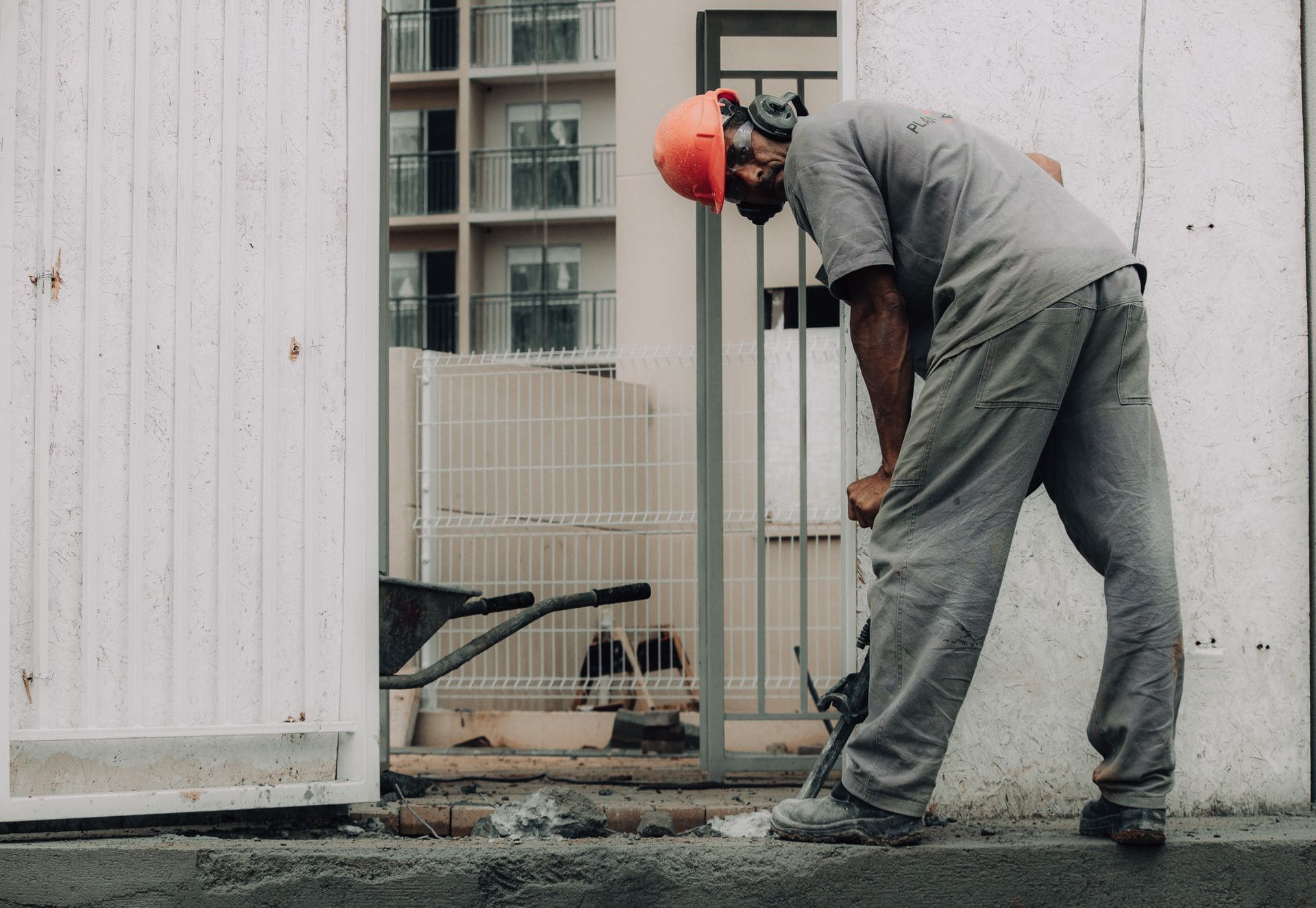
Floor & interior demolition · Arkansas & West Tennessee
The old floor is gone before the next trade shows up.
Tear-out and haul-off are one job. One contractor, one number. Ricky Ray owns this company and he is on the job — the man who prices the work is the man who runs it.
Free, no-obligation on-site quote.
The certificate goes to your office before we set foot on site. Ask and it is sent.
Ricky Ray prices the work and runs the crew. Same man on the phone, at the walkthrough, on the floor.
The debris leaves with us. You are not standing over a pile waiting on a roll-off that never got ordered.
All of Arkansas, plus the western half of Tennessee. We travel for commercial work.
That is the whole list of what we claim. No badges we did not earn.
Call for a WalkthroughWhat we tear out
Two jobs. Both of them end with a clean, swept slab.
We tear it out. You get a clean slab. That is the whole promise — and the second half of it is the part most crews leave for somebody else to finish.
Floor demolition
Whatever is stuck to that slab, it comes up. Tile and thinset. VCT and the black cutback mastic underneath it. Glue-down hardwood, nail-down over sleepers, carpet with the pad and tack strip. Epoxy and urethane coatings ground back to bare concrete. Sheet vinyl that has been down since the building went up, and the self-leveler somebody poured over it in 2004 to avoid dealing with it.
Ride-on scrapers where the square footage justifies one. Shot blasters and grinders where the adhesive has to come off the profile, not just the surface. Hand work at the perimeter, the columns and every threshold.
The target is a slab your flooring installer can work on the day he arrives — not one he has to argue with you about, and not one that fails a moisture test because nobody bothered to open it up.
- Ceramic, porcelain & stone tile
- VCT and cutback mastic
- Glue-down and nail-down hardwood
- Carpet, pad and tack strip
- Epoxy and coating removal
- Thinset and adhesive grinding
- Terrazzo and quarry tile
- Self-leveler and gypcrete
- Cove base and transitions
- Saw-cutting where the scope needs it
 01
01
Interior demolition
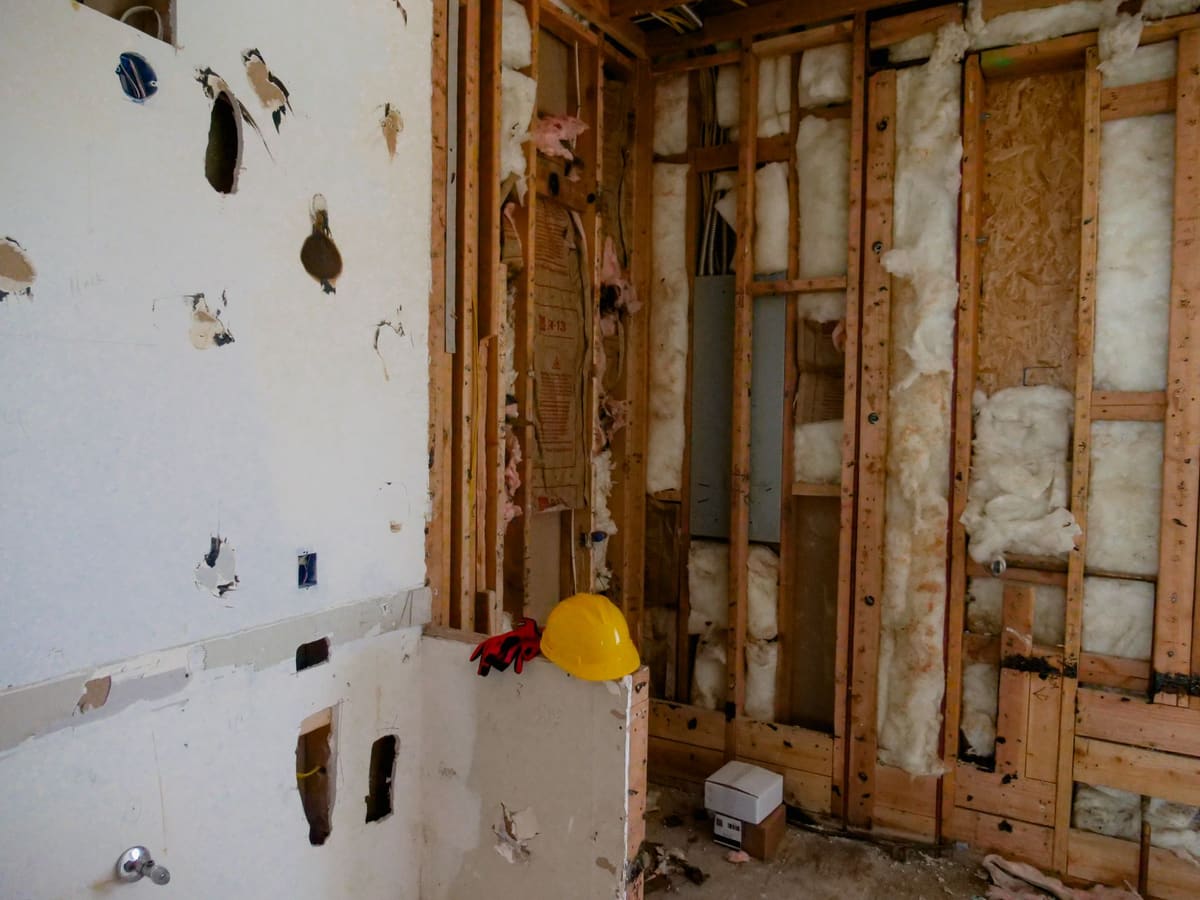
When the floor is only part of it. Non-structural walls, ceiling grid and tile, millwork, casework, built-in shelving, restroom and break-room strip-outs, fixtures, old equipment and the cabling nobody has traced since the last tenant.
Retail and office buildouts taken back to shell condition so the new plan has somewhere to start. If your architect drew it as demo scope, that is the scope we price — and we tell you plainly where our line is. Anything structural, anything load-bearing, anything needing a permit we did not price: that is not our lane, and we say so at the walkthrough rather than halfway through.
Same rule as the floor. It leaves the building with us, and the space is swept when we are done.
- Non-structural wall removal
- Ceiling grid and tile tear-down
- Millwork and casework
- Restroom & kitchen strip-outs
- Retail and office buildout gut
- Fixture and equipment removal
- Back-to-shell demolition
- Debris load-out and haul-off
 02
02
Who we work for
Mostly commercial. Mostly people already on a schedule.
The floor is off your critical path
You have a trade waiting on bare concrete and a demo line nobody wanted to own. We mobilise, tear it out, load it out and get gone — so the schedule does not slip sideways over a floor. One sub, one number, one line on the punch list.
The building stays open
Containment goes up and the tenants on the other side of it keep trading. We work around an occupied building instead of asking you to empty it and eat the downtime. Night and weekend work when the space cannot lose a business day.
You sell it. We clear it.
You closed the job on the new floor and you do not want the tear-out — it is the ugliest, dirtiest, most under-priced part of the contract. Hand it to us. Your installer shows up to a slab that is ready and your name is still the one on the work.
Yes, we do houses too
Kitchen tile that will not budge. A whole floor of glued hardwood. A bathroom back to the subfloor. Smaller than most of what we do, and we still show up, look at it and quote it straight.
Not sure which one you are? Call it in and describe the building. That is usually a two-minute conversation.
Call (501) 259-7997How the job runs
Six steps. No surprises in any of them.
The order matters. Most of what goes wrong on a demo job goes wrong because somebody skipped step four.
You call
Ricky picks up. Not a call centre, not a scheduler, not somebody reading a script off a screen who has to ask a manager.
He walks it
On-site walkthrough within two business days. He looks at what is actually down there — the layers, the transitions, the access — before anybody talks price.
Written number, same day
In writing, the day he walks it. Scope spelled out so you can see what is in it and what is not, and hand it to whoever signs.
Containment first
Plastic seals the work zone and the air returns get covered. That happens before the first tool runs. Not after, and not once somebody complains.
The floor comes out
Machines where they belong, hand tools where a machine would gouge. Door frames, jambs and thresholds protected on purpose.
Hauled off, swept
The debris leaves with us and the slab gets swept. One contractor, one mobilisation, one invoice. You walk it with him before he pulls off.
Step one costs you nothing and takes about five minutes.
Get a Free Quote Free, no-obligation on-site quote.Straight answers
The seven things everybody asks before they hire us.
You were going to ask anyway. Here they are answered up front, including the parts that are not in our favour.
Will the dust get everywhere — through the whole building?
Here is what the last day looks like. The plastic comes down. The debris is already on the truck, not stacked by your back door waiting on somebody else to come and collect it. The slab is swept. What you walk into is a bare floor the next trade can start on — not a room somebody has to clean out first before any work can happen in it.
That is the outcome. Here is how it is held to: plastic seals the work zone before a single tool runs, and the air returns get covered so your HVAC is not quietly pumping concrete dust into the suites down the hall. Grinding and shot blasting run to vacuum.
Covering the returns is the part that matters most, and it is the part that gets skipped. An uncovered return turns the building's own air handling into a delivery system: it lifts concrete dust off our floor and puts it through the ductwork into rooms nobody is working in — into the vents, the equipment and whatever is sitting on the desks.
Here is the part nobody tells you: dust cleanup beyond the work zone is not included unless it is quoted. If you want the neighbouring space wiped down too, say so at the walkthrough and it goes on the number. What we will not do is imply it is free and then argue about it on the last day.
Will you damage my subfloor — and then tell me it was already like that?
The whole point of the job is a slab the installer can work on, so tearing up the thing underneath defeats it. Hand tools go where a machine would gouge. Door frames, jambs, thresholds and transitions get protected or pulled on purpose — not knocked out and dealt with later.
If something under that floor is already cracked, spalled, rotten or wet, you hear about it the same day with a photo. Not at the end. Not on the invoice. On a wood subfloor we tell you before we start what the tear-out is likely to expose, because glue-down over old plank almost always exposes something.
A photo on the day it is found is what settles that argument before it starts. Nobody has to take anybody's word for what the slab looked like under the tile, because you saw it the same afternoon we did.
Will the price move once you open the floor up?
No. The number does not move unless you change the scope in writing. Not because we found a second layer of glue. Not because the mastic was worse than it looked. Not because the tile had a mud bed under it.
That is exactly why Ricky walks the job before he prices it. A number written off a photo or a phone call is a guess, and a guess is what gets re-priced halfway through the week. He looks at it first so the number holds.
What if the floor has asbestos in it?
Old vinyl tile and black cutback mastic can contain asbestos. In a building that went up before the 1980s that is a live possibility rather than a technicality — and it is exactly the material we get called about.
The test is the customer's to arrange and the customer's to pay for. It is not in our number.
Who is actually going to be standing in my building?
Ricky. The owner. The man who walked your floor and wrote your number is the man standing in your building when it comes up — not a salesman who quoted it and disappeared, and not a name on the paperwork you never hear from again once the job is booked.
He answers the phone himself as well. Not a call centre, not an answering service, not somebody who takes a message and passes it along.
On site within two business days of that call. The written number the same day he walks it. And generally, no money up front — it depends on the job, but the normal case is that you are not paying anything before the work starts.
Those dates are on this page because they are the ones people get let down on. A contractor who will not put a date next to the walkthrough is telling you something.
Something is wrong a week later. Then what?
He comes back and fixes it.
You call the same number you called the first time and you get the same man — the one who priced the job and ran it. Not a claims process, not a different office, not somebody who has to be told from the start what the work was.
How clean is clean — and who hauls it off?
The debris leaves with us. Haul-off is in the number, not a second contract with an outfit you have to chase down after we have gone.
The slab gets swept. That is the finish line we work to — a slab the next trade can start on, not a floor with the covering off and the pile still sitting in the middle of it.
Where "clean" stops is at the containment. Past that line it is quoted work or it is not our work, and you find that out at the walkthrough rather than on the last afternoon.
Got an eighth question? Ask it on the phone. He would rather answer it now than on day three.
Call for a WalkthroughWhere we work
All of Arkansas. The western half of Tennessee.
Based on Mill Creek Road in Higden, up by Greers Ferry. We cover the whole state of Arkansas and west Tennessee: Little Rock is an hour and change, Memphis is a straight run east, and northwest Arkansas is a morning. The truck is loaded either way — we travel for commercial work.
Arkansas
Statewide
- Higden
- Heber Springs
- Greers Ferry
- Clinton
- Searcy
- Beebe
- Cabot
- Jacksonville
- Sherwood
- North Little Rock
- Little Rock
- Maumelle
- Conway
- Morrilton
- Russellville
- Benton
- Bryant
- Hot Springs
- Malvern
- Arkadelphia
- Pine Bluff
- Stuttgart
- El Dorado
- Camden
- Magnolia
- Texarkana
- Hope
- Fort Smith
- Van Buren
- Fayetteville
- Springdale
- Rogers
- Bentonville
- Harrison
- Mountain Home
- Batesville
- Newport
- Jonesboro
- Paragould
- Blytheville
- West Memphis
- Forrest City
West Tennessee
Memphis and everything west of the river
- Memphis
- Bartlett
- Germantown
- Collierville
- Cordova
- Millington
- Arlington
- Covington
- Somerville
- Brownsville
- Ripley
- Jackson
- Dyersburg
- Union City
- Martin
- Humboldt
- Milan
- Trenton
Do not see your town? If it is in Arkansas, or west of the Tennessee River, call and ask. The answer is usually yes.
Call (501) 259-7997On price
We are not the low bid.
Somebody will always quote it cheaper. Look at what they left off before you sign it.
The cheap number usually skips the haul-off, so you are hiring a second outfit to move the pile — and paying a second mobilisation to do it. Or it assumes one layer of glue and quietly re-prices the day it finds two. Or containment turns out to be an extra line item that appears right after the dust does.
We sit in the middle of the market on purpose. Not the cheapest, not premium. What you are paying for is a number that holds, a work zone that stays sealed, and a floor that is actually gone at the end of it.
- In the number: tear-out, containment, load-out, haul-off, swept slab.
- In the number: the walkthrough and the written quote, at no charge.
- Not in it: dust cleanup past the work zone, unless we quoted it.
- Not in it: the asbestos test. That one is the customer's to arrange and pay for.
- Not in it: anything structural, or work needing a permit we did not price.
- Not in it: the new floor. We take the old one out; your installer puts the new one down.
Get the number in writing and compare it line for line.
Get a Free Quote
Next step
Tell us what is on the floor. We will come look at it.
Free on-site walkthrough within two business days of your call, and a written number the same day he walks it. No obligation, and nobody chasing you afterwards.
Free, no-obligation on-site quote.
Ricky answers (501) 259-7997