The Owner Runs It
Ricky Ray owns the company and is on the job. He walks the space, prices the work, and is there when the tear-out happens. Same man start to finish.
About Ricky →Retail & Shopping Centers · Arkansas
Tile, VCT, glued hardwood, carpet, tack strip, mastic. Torn out of your storefront or center suite and hauled off the same trip. Owner-operated by Ricky Ray, who walks the job himself before anyone quotes a number.
Free, no-obligation on-site quote.
Superior Floor Demolition is owned and operated by Ricky Ray. No salesman quotes it and vanishes.
The business is insured for general liability. Certificate available on request before we set foot in your center.
Not a sideline priced as an afterthought. Floor demolition is what this company does.
Containment goes up. The suites either side of yours keep trading while we tear out.
What Goes Wrong
Retail schedules are unforgiving. The lease clock runs whether the slab is ready or not, and the trades behind you can't start on tile fragments and dried mastic. Here's what actually stalls a shopping center suite.
Silica dust doesn't respect a lease line. It gets into the salon two doors down and the HVAC return that feeds half the building. Uncontained tear-out gets a job shut down by the property manager before lunch.
Someone quotes off a drawing, opens the floor, finds a second layer of glued vinyl over the original terrazzo, and the change order lands on your desk. Now the buildout budget is a negotiation instead of a plan.
The tear-out crew leaves. The pile stays. Now you're chasing a second contractor for haul-off while your flooring installer is standing in the parking lot billing you for a wasted morning.
Ridges of thinset. Glue smears. Tack strip nails still in the concrete. The next trade either eats the prep cost or bounces it straight back to you as a delay.
Why Contractors Call Ricky
No awards on the wall and no rating to quote. What's here is how the work is structured, and that's the part that decides whether your slab is ready on Friday.
Ricky Ray owns the company and is on the job. He walks the space, prices the work, and is there when the tear-out happens. Same man start to finish.
About Ricky →The debris leaves with us. Nobody is left standing over a pile in a retail bay waiting on a second contractor to schedule a trailer.
Floor demolition →Plastic seals the doorway and the returns get covered before the first tile lifts. The tenants on the other side of the wall keep selling.
Occupied-building work →What's coming out, what's staying, where the debris goes, and what it costs. In writing after the walkthrough. Surprises are the contractor's problem, not yours.
Get a Free Quote →A center suite often can't be torn out at 2pm on a Saturday. Say so at the walkthrough and the schedule gets built around your trading hours.
Interior demolition →Inline shops, anchor bays, strip-center suites, standalone storefronts, food-court units. Different slabs, different adhesives, same handover standard.
All building types →Occupied Centers
Poly sheeting from slab to deck across the opening. Returns and supply grilles sealed. Negative air where the layout calls for it. Dust is the honest cost of ripping a floor up, so we contain it instead of pretending it isn't there. The neighboring tenant should notice the noise and nothing else.
The Clean Slab Standard
Two halves. Ricky walks and prices the job before a machine is booked; then the crew works to the scope that walkthrough produced. Every step is the same on a 900 sq ft inline shop and a 24,000 sq ft anchor bay.
Free, on-site, no obligation. He checks what's on the slab, how many layers, how the adhesive is behaving, and where the debris route runs to the loading area.
What comes out, what stays, containment, haul-off, handover condition. One number, in writing, before you commit anything.
Nights, early mornings, or a dead Monday. Property-manager notice and dock access get sorted here, not on day one.
Doorways sealed, HVAC returns covered, protection down on any path the debris travels. Nothing lifts until that's done.
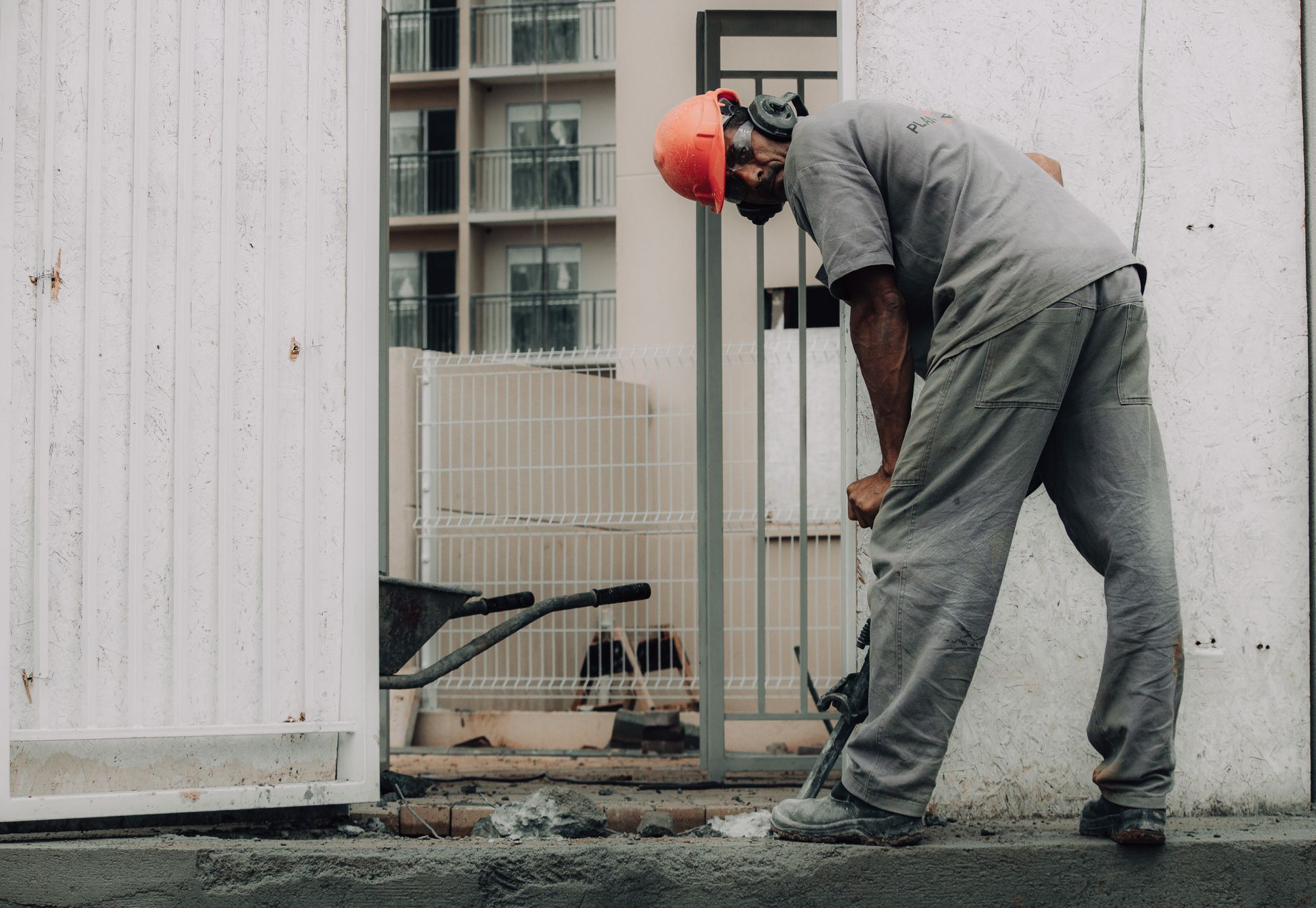
Ride-on and walk-behind tear-out, tile and VCT off, carpet and pad rolled, tack strip pulled, mastic ground back. Loaded as we go, not piled.
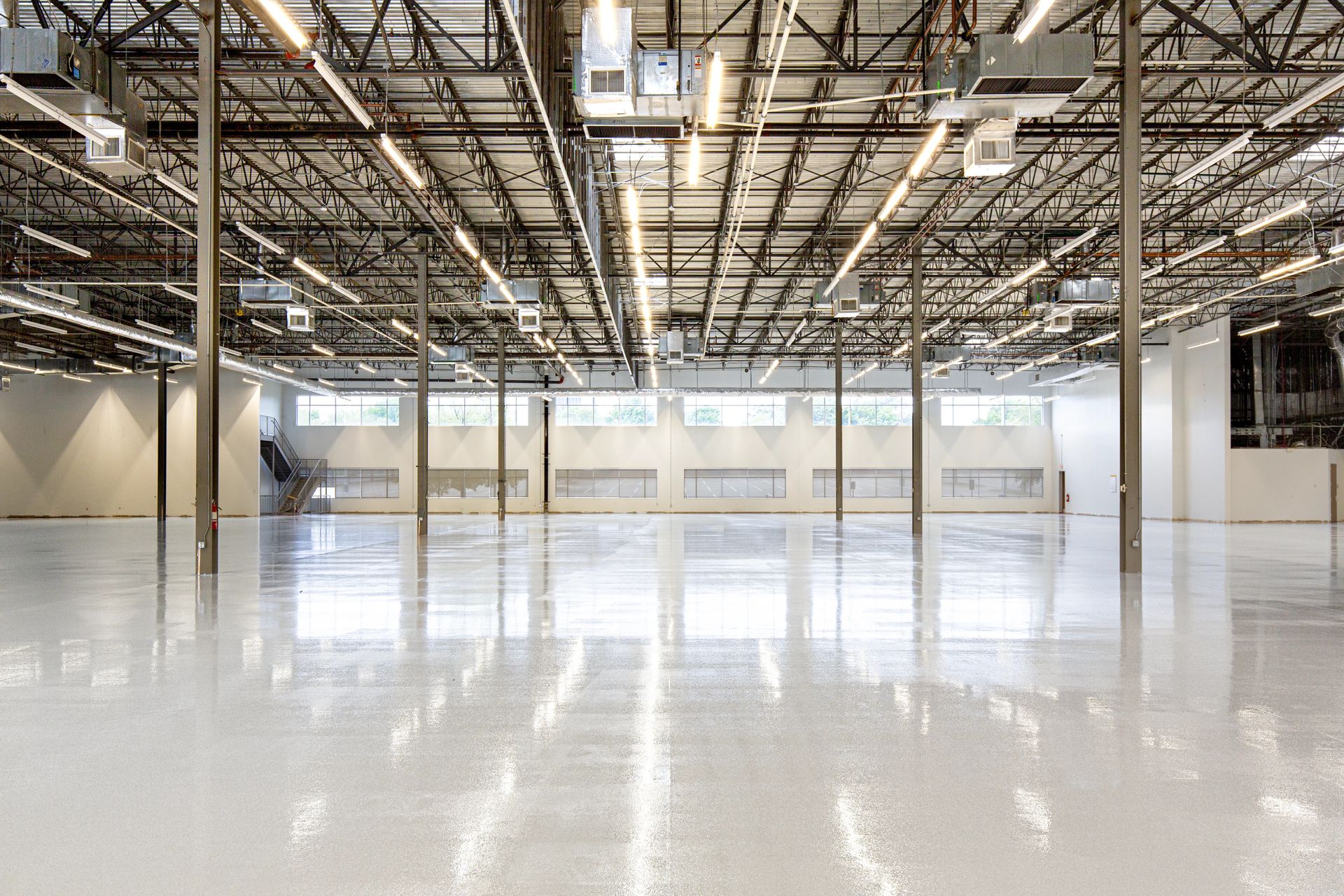
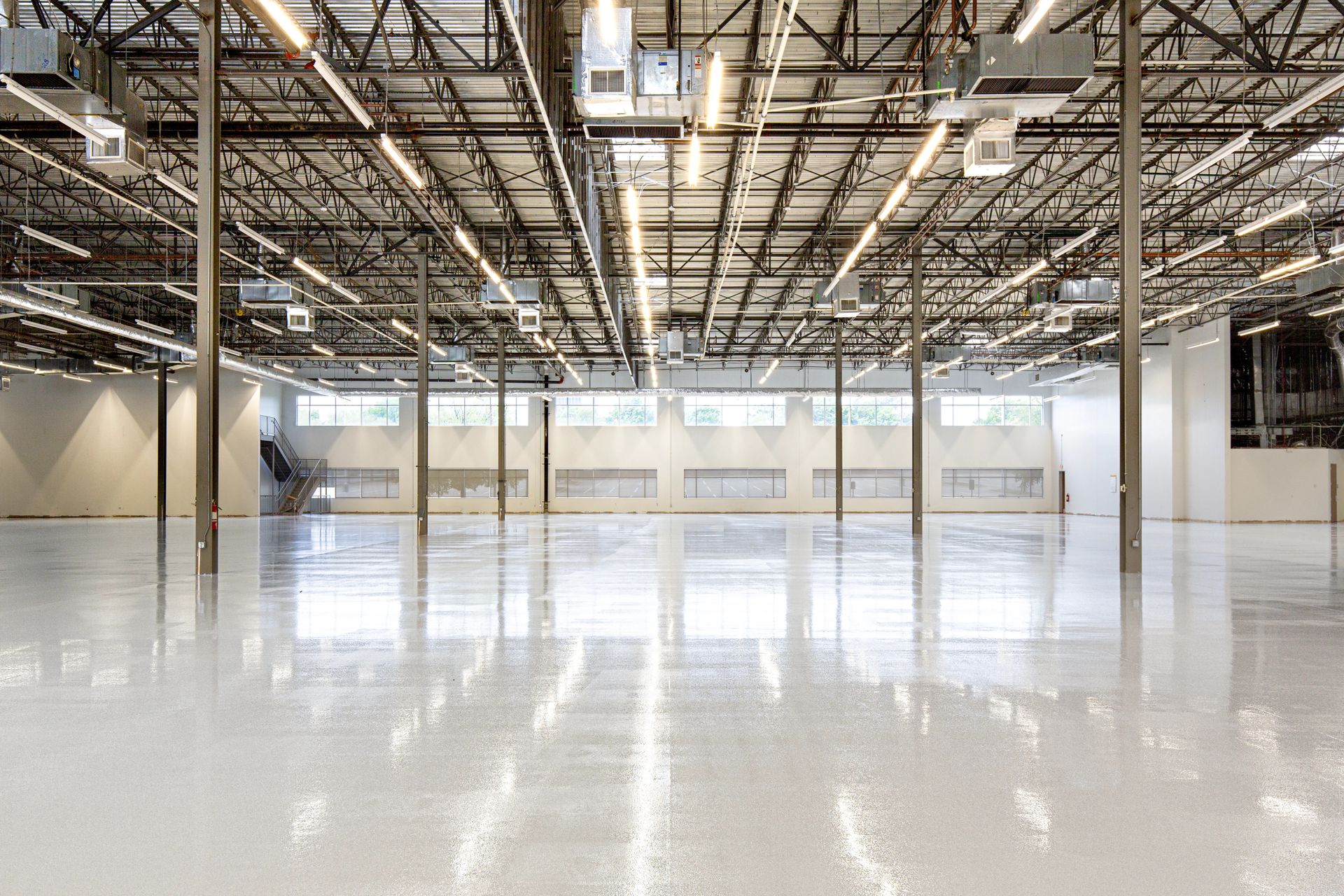
Debris gone the same trip. Floor swept. You walk it with Ricky and the next trade starts on bare concrete.
What We Tear Out
Ceramic over thinset. VCT welded down with black mastic. Glued engineered hardwood. Broadloom and pad with a thousand tack-strip nails. Epoxy that has to be ground rather than lifted.


Say It Before You Have To Ask
These are the four things a center manager asks after the polite part of the conversation. Here are the answers, up front.
Floor demolition makes dust. That's the truth of it. What stops it spreading is containment: sealed openings, covered returns, and dust suppression at the machine. We build that in before the first tile lifts rather than sweeping up an argument afterward. If the suite backs onto a shared HVAC system, say so at the walkthrough — it changes how we seal.
Corners, jambs and glass get protected before machines move through. Mastic is ground back, not gouged out. On a post-tension slab or a suite with in-floor conduit, flag it at the walkthrough and the method changes — different machine, different depth. That's a conversation before the job, not a repair bill after it.
The walkthrough exists so it doesn't. Ricky looks at what's actually on the slab and how many layers are under it before he writes a number, and the scope says what's included. If something genuinely hidden turns up — a second glued layer nobody knew about — you hear about it that day, with the cost, before any extra work happens.
Old 9-inch tile and the black mastic under it are common in older Arkansas retail buildings, and neither one gets torn out on a guess. Testing is arranged by the building owner through a licensed testing outfit before demolition is scheduled. If it comes back positive, that's abatement work and it goes to a licensed abatement contractor first. We start after the slab is cleared.
Terms get agreed in writing with the scope, before anything is scheduled. Ask Ricky at the walkthrough and you'll get a straight answer for your job rather than a policy page. No deposit gets taken on a phone call.
What Drives the Number
A price on a retail floor isn't square footage times a rate. Six things move it, and five of them can only be judged standing on the slab. That's why the walkthrough is free and the quote comes after it.
Where We Work
Based at 29 Mill Creek Rd in Higden. The truck covers the entire state of Arkansas and the western half of Tennessee. If your center is outside that, say so on the call and you'll get a straight yes or no rather than a maybe.
Strip centers, inline suites and standalone storefronts across the state. Pick your city for the local page, or call and describe the space.
Questions We Get Asked
Straight answers about tearing out a shopping center or storefront floor in Arkansas. Anything not covered here, ask Ricky on the walkthrough.
Strip-center suites, enclosed-mall units, standalone storefronts, grocery and convenience buildings, food-court bays. If it has a floor covering glued, nailed or set on a slab, it comes off.
Sealed doorways, covered HVAC returns and protected debris routes. Off-hours and overnight schedules are normal on occupied centers. Tell us the trading hours at the walkthrough.
Layers, adhesive type, square footage, debris route, occupied or dark, and the handover condition all move the number. The walkthrough is free and the written price comes out of it.
Material is loaded as it comes up rather than piled in the bay. You don't book a second contractor and you don't wait on a trailer that never shows.
Covering off, tack strip pulled, adhesive ground back so the next trade starts on the slab instead of prepping it. If your flooring installer needs a specific profile, name it before we quote.
Nine-inch tile and black cutback mastic in older Arkansas retail buildings get tested, not guessed at. Positive results go to a licensed abatement contractor first. We work after the slab is cleared.
He walks the job, looks at what's actually under the covering, and gives you a written scope and price. No deposit on a phone call.
(501) 259-7997Free, no-obligation on-site quote. Arkansas and west Tennessee. By appointment.