Epoxy & Urethane Coatings
Ground and shot-blasted off the slab to a bondable profile, not skimmed. Grinder tracks left flat so the next coating actually keys in.
Floor demolition →Warehouse & Industrial · Arkansas
Epoxy, VCT, glued rubber, mastic, tile, sealer. We grind it, chip it, cut it and haul it. Owned and operated by Ricky Ray, who walks the building before anyone quotes a number — and who is on the slab when the work runs.
Free, no-obligation on-site quote.
Downtime costs more than the tear-out does. Every one of these has cost a facility manager a week he did not have.
Racking is booked, the coating crew is booked, and the tear-out guy stops answering his phone. Your whole sequence moves and every trade behind you bills for the wait.
A quote written off a floor plan turns into a change order the day the grinder hits mastic nobody looked for. Ricky walks the building first for exactly that reason.
Concrete dust in a running warehouse means product covered, forklifts down, and staff sent home. Containment is not an add-on we mention at the end.
Debris gone, adhesive ridges left behind. Then the coating fails, or the epoxy will not bond, and somebody comes back to grind it a second time on your dime.
Straight facts. Nothing here we cannot back if you ask at the walkthrough.
Warehouse and industrial floors carry the toughest coverings in the trade — thick, bonded, and glued down to last. Each one comes off a different way, with a different machine.
Ground and shot-blasted off the slab to a bondable profile, not skimmed. Grinder tracks left flat so the next coating actually keys in.
Floor demolition →Tile broken out and the mastic beneath it removed in the same pass. Old warehouse offices and break rooms are usually two layers deep, not one.
All building types →Rolled rubber, welded vinyl and sheet flooring in production areas and locker rooms. Cut, pulled, and the adhesive scraped and ground behind it.
See what we tear out →Saw-cut and remove slab sections for new drains, pits, conduit or equipment pads. Clean edges, spoil hauled the same day.
Interior demolition →Mezzanine offices, partitions, ceilings and carpet taken back to studs and slab so the buildout crew starts on a clean shell.
Office buildings →Loaded and gone as we go, not stacked in your dock for a week. Tear-out and haul are the same contract and the same bill.
Occupied buildings →Occupied Facilities
Most industrial floor work in Arkansas happens in a building that cannot close. Plastic and zip-wall seal the work area at the doorways. Negative air pulls the dust toward the machine instead of toward your inventory. Shifts get worked around, including nights, if that is what keeps your lines running.
Say it plainly: there will be dust and there will be noise. The job is to keep both inside the containment and off your product.
Two halves. Ricky prices the first before anyone touches the second, and the price does not move once it is written.
Tear-out is judged by what is left behind, not by the size of the pile. Flat, bare, swept, and ready for the next trade.

These are the three things every facility manager is thinking and most contractors dodge until the invoice.
There will be dust. That is the honest answer. It stays inside the containment because the doorways get sealed and the air gets pulled toward the machine, not toward your racking. In an occupied facility we agree the containment line with you before day one, in writing.
The number is written after Ricky walks the building and cuts test patches, so the surprises are found before you sign, not after. If you change the scope, we re-price it and tell you before we do the work. No change order lands on your desk unannounced.
Old mastic and 9x9 tile get flagged at the walkthrough before anything is disturbed. Testing goes through a licensed lab, arranged for you and billed at cost. If it comes back positive, that abatement is a licensed abatement contractor's work and we say so — we do not pretend it is ours.
We do not publish a square-foot rate, because a rate quoted before anyone sees the floor is a guess that turns into a change order. Here is what actually moves the number, so you can see it coming.
Free, no-obligation on-site quote.
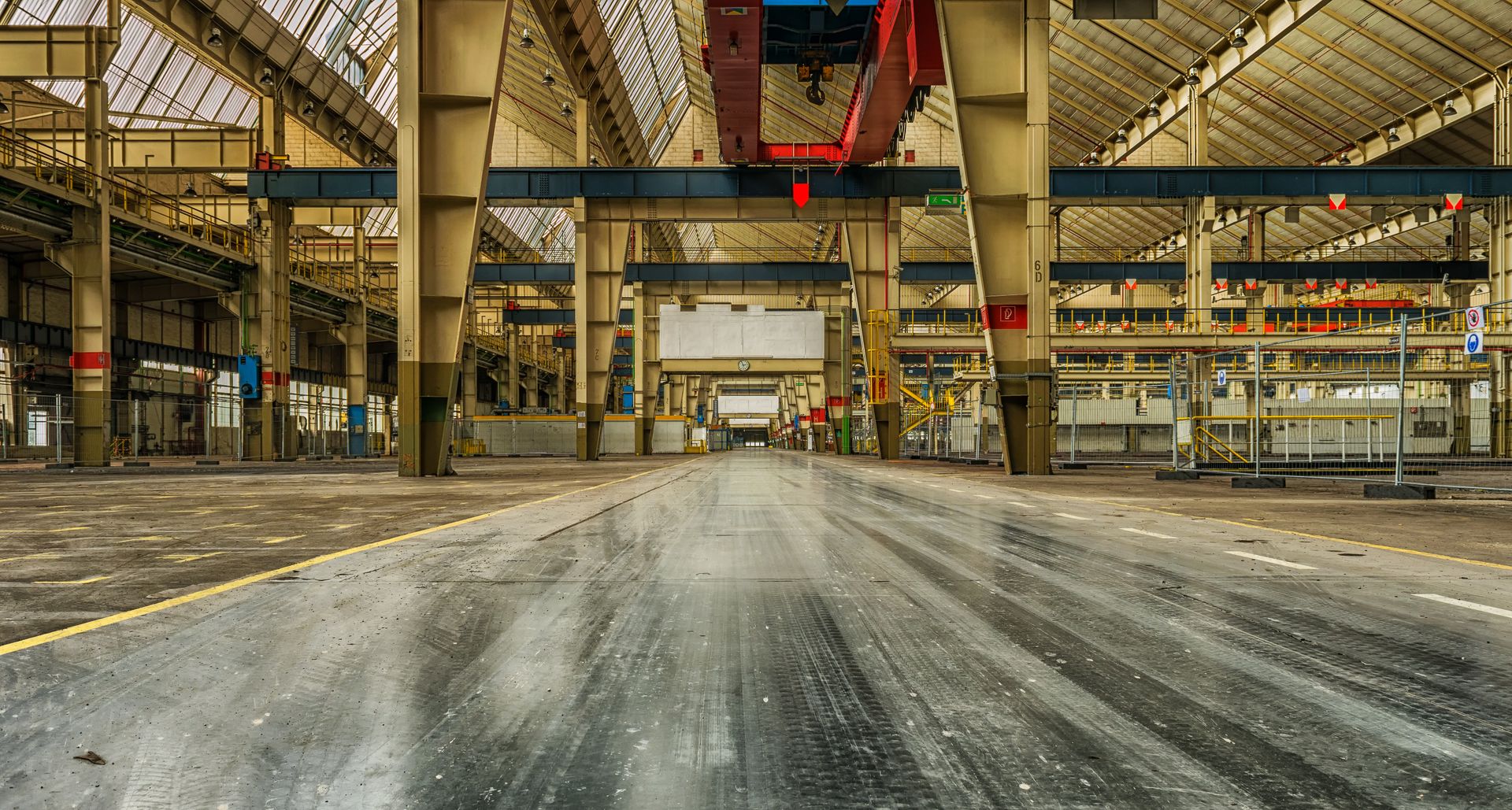
Based at 29 Mill Creek Rd in Higden, and working the entire state of Arkansas plus the western half of Tennessee. Distribution corridors, plants and warehouse parks are most of the work — the buildings are big, the floors are thick, and the schedules are tight.
Outside that footprint we say no rather than pretend. If your building is a long way past Memphis, call anyway and Ricky will tell you straight whether it makes sense.
The questions people actually type in before they call a floor demolition contractor.
A warehouse stores and ships. An industrial building makes or processes something. Both sit on thick concrete, but industrial slabs usually carry heavier coatings, machine pads and pits, so the tear-out is a different job.
Warehousing normally falls under industrial use, which is why we quote them together on this page. For our purposes the question that matters is simpler: what is glued to the slab, and how many layers of it.
Plants, distribution centers, cold storage, food processing, plate shops, mechanical rooms. Thick concrete, bonded epoxy or urethane, sometimes trenching and equipment pads, and almost always a building that cannot fully shut down.
Names change, floors do not. A DC in Little Rock and a depot in West Memphis both hand us the same problem: acres of coating or tile that has to come off without stopping the trucks.
Ricky walks the building, cuts test patches, and gives you a fixed written scope and price first. Payment terms are agreed on that document, in plain language, before any machine comes off the trailer.
Plenty of industrial floor work only makes sense between shifts or over a weekend. Tell Ricky the operating window when he walks it and the schedule gets built around your production, not around ours.
Free On-Site Quote
Call and Ricky walks the building before anyone quotes anything. You get a fixed written scope and price, dates that fit your other trades, and a slab your next contractor can actually work on.
(501) 259-7997Free, no-obligation on-site quote. Site visits by appointment. Insured for general liability — certificate available on request.