- Home
- Floor demolition
- North Little Rock
Pulaski County · I-40 and I-30
Floor Demolition in North Little Rock, Arkansas
North of the Arkansas River, about 54 miles from the yard. The floors on this side of the water tend to be wide, flat and on the ground — which means the machines get to earn their keep and the truck backs straight up to a dock.
Free, no-obligation on-site quote.
What comes off the slab
Big flat floors, and what has been painted onto them
Ground-level square footage is the North Little Rock story. Shops, plants, distribution space and single-storey commercial sitting on slab-on-grade, which changes the tool list completely from the kind of work that happens in an office tower. Here the question is not how you get the debris out. It is what has been bonded to the concrete and how many passes it takes to get it off.
Coatings, and how many coats there really are
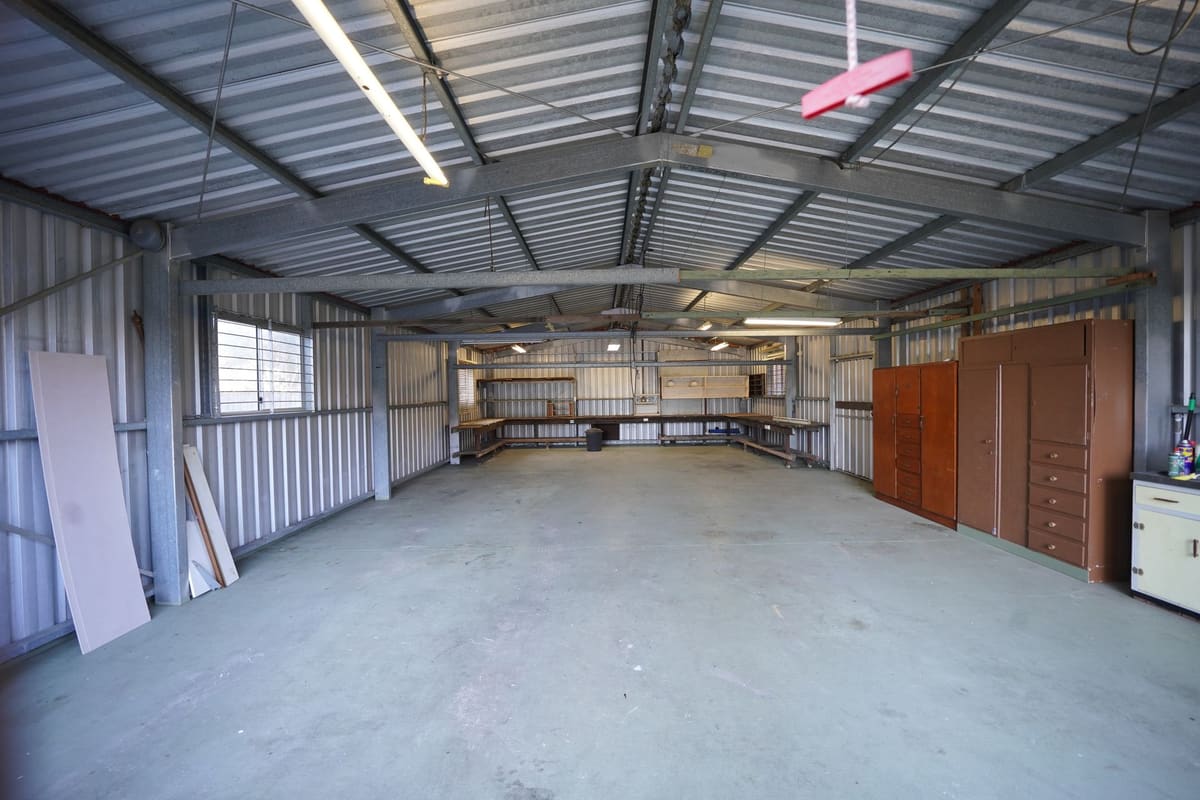
Epoxy and urethane are the ones we get called about most on this side of the river. Nobody ever put down one coat. There is the original system, the recoat somebody did when it started to lift, and often a patch course under both.
A shot blaster takes that back to a profile the next system will actually bond to, and it runs to vacuum so the operation next door can keep running. Where the slab is spalled underneath, you find out on the day it is exposed and not in an invoice afterwards.
- Epoxy and urethane systems
- Sealers and cure-and-seal
- Line paint and deck coatings
- Old patch and self-leveler
- Failed toppings
- Profile left for the new system
The kit, and what each thing is actually for
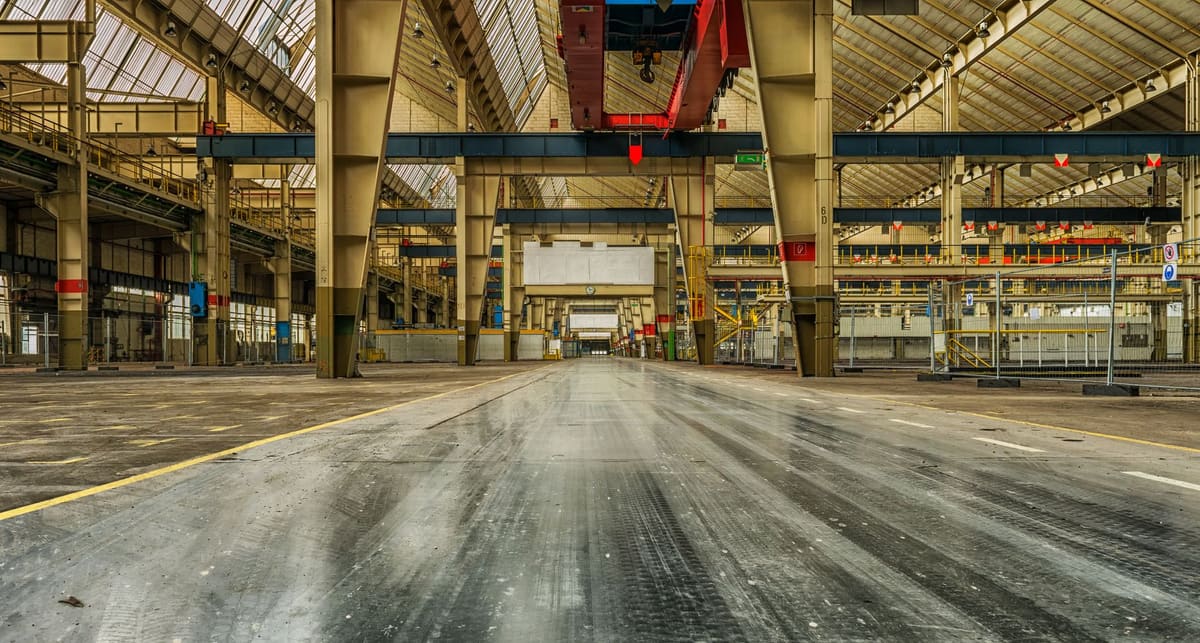
An open slab is the only place this equipment gets to do what it was built to do. In a partitioned office you spend the day turning a machine around; in twenty thousand open feet you point it and go.
- Ride-on scraperTile, VCT, carpet and glue-down goods across open floor, at a rate hand tools cannot touch.
- Shot blasterCoatings, sealers and mastic residue off, and a bonding profile left behind. Runs to vacuum.
- GrinderEdges, doorways, columns and anywhere the ride-on cannot reach. Also runs to vacuum.
- SawSaw-cutting where a section of slab has to come out rather than come clean.
54 miles · the corridor
The trailer, not the truck, sets the plan
Fifty-four miles is nothing for a pickup and a walkthrough. It is a real consideration for a machine on a trailer, and that is the honest difference on a job like this.
A ride-on scraper and a shot blaster are not things you throw in the back on the way past. They come down on their own transport, and once they are on site the sensible thing is to keep them working. So a North Little Rock coating removal gets planned as a run rather than as a series of visits — not because the drive is long, but because the equipment move is the expensive part and doing it twice is waste you would be paying for.
What the corridor distance does buy is a clean separation between looking and working. Ricky comes down, walks the slab, opens a test patch on the coating and writes the number, all without a machine on a trailer behind him. Then the mobilisation happens once, with the scope already settled.
And the load-out here is the easy half of the job. A dock door and a truck bay do in an afternoon what a freight elevator makes into a week.
Where else we work →Who calls
The North Little Rock caller
Different buildings, different buyers. Fewer tenant fit-outs than across the river, more people responsible for a floor that something heavy drives on.
Plant and warehouse operations
The coating has failed, the floor is being recoated or polished, and everything depends on the prep underneath. You want a profile the new system bonds to and a slab you can hand to the applicator without an argument. Get a Free Quote
General contractors on single-storey work
Retail, light industrial, institutional. Wide floors where the demo either runs fast or blows the programme, and the difference is whether the machines were the right call.
Flooring and coatings contractors
You are laying the new system and the tear-out is the risk you would rather not own. Hand us the removal and the prep, and take delivery of a swept slab you can moisture test.
Facility managers with live operations
The building does not stop because the floor is coming up. Sealed zone, covered air returns, vacuum on every machine, and hours that fit around a shift. Occupied buildings →
How it runs
Four steps on an open slab
The short version. The full sequence sits on the floor demolition page.
Call with the square footage
Ricky answers. On this kind of job the area and the coating history are the two numbers that matter, so lead with those.
Test patch on the slab
Within two business days. A patch comes off so we know the build-up and the blast rate before anybody commits. Written number the same day.
One mobilisation
Machines come down once and stay working. Containment plastic seals the zone, air returns covered, everything to vacuum.
Out through the dock
Debris straight onto the truck, slab swept, and we walk the punch list with you before the trailer is loaded.
Anything structural or load-bearing, and anything needing a permit we did not price, is out of our lane. You hear that at the walkthrough.
See what we tear out →Straight answers
Three questions about a big slab
How big does a slab have to be before the machines are worth bringing?
That is exactly the question Ricky is answering when he walks it, and the answer is not the same on every floor.
A ride-on scraper and a shot blaster come down on a trailer, and that transport costs the same whether the floor is four thousand feet or forty. Below a certain size the machines cost you more than they save and the job goes back to hand tools. You will hear which side of the line you are on before there is a number on paper.
Our building runs a shift. Can you work around it?
Yes, and on an open slab it is more workable than people expect, because the containment can be built around the work rather than around the building.
Plastic seals the work zone, the air returns are covered before anything starts, and every machine runs to vacuum. Night and weekend work when the space cannot lose a business day. Dust cleanup beyond the work zone is not included unless it is quoted.
How do you price an old coating when nobody knows what is under it?
With a test patch, at the walkthrough. Two coats of urethane over a sound slab and four coats over a patched one blast at completely different rates.
Guessing at that spread is how a fixed price quietly turns into a change order. Ricky opens a patch, sees the build-up, and writes the number the same day. It does not move mid-job unless you change the scope in writing.
The rest of the work
When more than the floor is going
Interior demolition
Non-structural walls, ceiling grid and tile, millwork and casework, back-to-shell strip-out. On a single-storey repurpose the office block usually comes out while the slab is being blasted — same crew, same contract.
Occupied buildings
Working next to a live operation instead of waiting for it to stop. Sealed zones, vacuum on everything, and night or weekend runs where a lost production day costs more than the hours do.
Nearby
The towns either side of us
North Little Rock sits where I-40 and I-30 come together on the north bank. These three are on the same run.
The footprint runs the whole state of Arkansas and the western half of Tennessee. Full list on the service areas page.
All service areas →
North Little Rock, Arkansas
We tear it out. You get a clean slab.
Tell us the square footage and what has been coated onto it. If the machines are not the right answer for your floor, you will hear that too — we would rather lose the mobilisation than sell you one you did not need.
Free, no-obligation on-site quote.
Ricky answers(501) 259-7997