
- Home
- Floor demolition
- Rogers
Benton County · About 121 miles out
Floor Demolition in Rogers, AR
Rogers is the first Benton County city coming up I‑49, about 121 miles from the yard in Higden. Retail suites, restaurant kitchens, hotel corridors. Smaller footprints with a lot more finish detail in them, and a punch walk before we pull off site.
Free, no-obligation on-site quote.
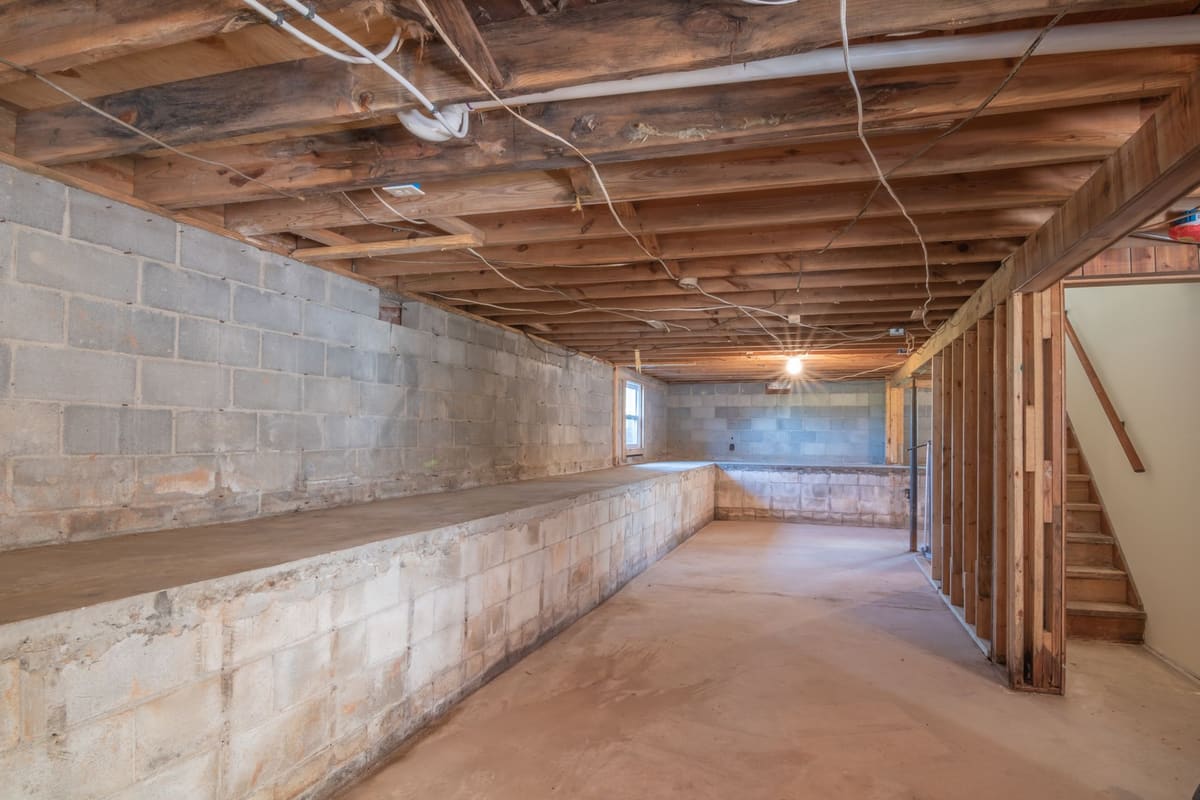 01
01
What comes up off the floor here
Tile, thresholds and the mud bed underneath
Rogers has 75,639 people and the commercial stock to match: storefronts, restaurants, hotel and clinic corridors, suites in multi-tenant buildings. South Dixieland Road is the retail spine on that side of town, and retail frontage is where most of this work sits. It is a different animal from a warehouse floor plate — less square footage, far more edge.
The one that surprises people is the mud bed. Old ceramic and quarry tile in a kitchen or a lobby often sits on an inch and a half of mortar, and that is not a scraper job, it is tonnage. It comes out in chunks, it goes out in a lot more bins than the square footage suggests, and it gets quoted that way from the start rather than discovered halfway through.
Quarry tile in a commercial kitchen brings its own problems: it is bedded over a slope to the drains, it is grouted tight, and the coved base up the wall has to come with it. Out front the usual suspects are sheet vinyl, carpet tile over a hard-set adhesive, and old VCT with cutback mastic under it. Transitions, thresholds and cove base are the slow, quiet part of every one of those jobs.
- Ceramic and porcelain tile on thinset
- Tile set on a full mud bed
- Quarry tile and coved base in kitchens
- Terrazzo
- Sheet vinyl and hard-set carpet tile
- VCT and the cutback mastic under it
- Carpet, pad and tack strip
- Glue-down hardwood, and nail-down over sleepers
- Transitions, thresholds and cove base
- Self-leveler, gypcrete, sound mat and underlayment
Distance and schedule
The second trip is the expensive one
Rogers is about 121 miles from the yard, straight-line between town centres. The road figure is longer. At this distance the drive is not what costs you money — going back is.
So the job is built to end properly the first time. The punch walk happens before the crew pulls off site, not on a return visit a week later. Somebody walks the floor with you while the truck is still loading: edges at the thresholds, the perimeter where the cove base was, adhesive residue, the corners under where the casework used to sit. If something needs another twenty minutes, it gets those twenty minutes there and then. That is a far cheaper habit than a second mobilisation, and it is the reason we would rather leave an hour later than come back.
The other half of it is sequencing. Rogers has a lot of multi-tenant buildings, and the way that usually turns up is a landlord or a manager with three or four small suites turning over inside a few months. Line those up and they run inside one mobilisation, one suite after another, containment moving down the corridor as it goes. Split across three separate calls and you pay to get the crew up here three times.
The walkthrough is the same deal. At this distance it is a deliberate trip, so we measure every space you are thinking about, not just the one that is empty today. That costs you nothing and it is what lets the sequencing work.
Two business days from your call to that walkthrough. A written number the same day. Nights and weekends are on the table too, which for a trading storefront or a hotel corridor is usually the only version that works.
- The punch walk happens before the crew leaves the site.
- Several suites in one building run inside a single mobilisation.
- We measure every space you are thinking about at the walkthrough.
- The price does not move unless you change scope in writing.
Mid-market, and deliberately not the low bid. A low bid that needs a second trip was never the cheaper number.
Get a Free QuoteWho calls from Rogers
Mostly the people putting the new floor down
A retail and hospitality town calls in a different order to an industrial one. This is the order it comes in here.
Flooring installers and dealers
You sold the floor. You do not want your installers on their knees with a scraper for three days, and you do not want to inherit a substrate somebody else guessed at. We take the old floor off, deal with the mastic and the mud bed, and hand you a slab flat and clean enough to warrant your own work over.
Retail and property managers
A suite turns over, or four of them do. The neighbours are still trading, the corridor still has to work, and the dust cannot end up in somebody else’s shop. Containment goes up first and the air returns get covered before anything comes down. Cleanup beyond the work zone is not included unless it is quoted, so ask and it goes in the number.
General contractors
Buildouts and remodels where the floor is on the critical path and nothing follows until the substrate is signed off. One contract, one crew, a date for the programme, and a straight answer at the walkthrough about what is not our lane — anything structural, load-bearing, or needing a permit we did not price.
Homeowners mid-remodel
Real work and welcome, but never the lead this far out. One room on its own rarely carries the run. If your job can sit alongside a commercial one, or you can wait for the timing, say so on the call and we will tell you honestly whether it works.
The job
Four steps, and the last one matters most
The full sequence is on the floor demolition page. Here is how it runs on a Rogers job, where the aim is to finish it in one visit.
You call
Ricky picks up himself. No call centre, no answering service. What is on the floor, roughly how much of it, how many suites, and whether the neighbours are trading while it happens.
The walkthrough
On site within two business days, measuring every space in play rather than only the empty one. Written number the same day. It holds unless you change scope in writing.
Containment, then tear-out
Plastic seals the work zone, air returns covered, before a single tile lifts. Scrapers, grinders and saws running to vacuum, and the containment moves down the corridor with the work.
Punch walk, then load-out
We walk it with you while the truck is loading. Edges, thresholds, the perimeter, adhesive residue. Then debris hauled off and the slab swept. No second trip for snagging.
Straight answers
The three questions Rogers asks
We have four small suites in one building. Can they be done in one go?
That is the version we would rather quote, and at about 121 miles out it is the version that saves you money. Four suites sequenced back to back is one mobilisation. Four separate calls across a year is four.
Bring the whole picture to the walkthrough even if only one unit is empty today. We will measure the lot, price them as a block, and put the order in writing so the containment can walk down the corridor instead of being built four times.
Our tile is set in a mud bed, not thinset. Does that change anything?
It changes almost everything about the number. A tile bedded in an inch and a half of mortar is not a surface finish, it is a layer of the building, and it comes out by weight rather than by square foot. More labour, more bins, a longer load-out.
That is a thing to establish at the walkthrough rather than on day two. If we can lift a spare tile or look at an existing threshold, we can usually tell you on the spot. Quarry tile in a kitchen is nearly always the heavy version, and the coved base goes with it.
Do you want money up front?
Depending on the job, but generally no money up front. What you get instead is one contract, one crew, and a price that does not move unless you change scope in writing.
We are mid-market and we would rather say so here than surprise you at the walkthrough. And if something is wrong later, Ricky comes back and fixes it.
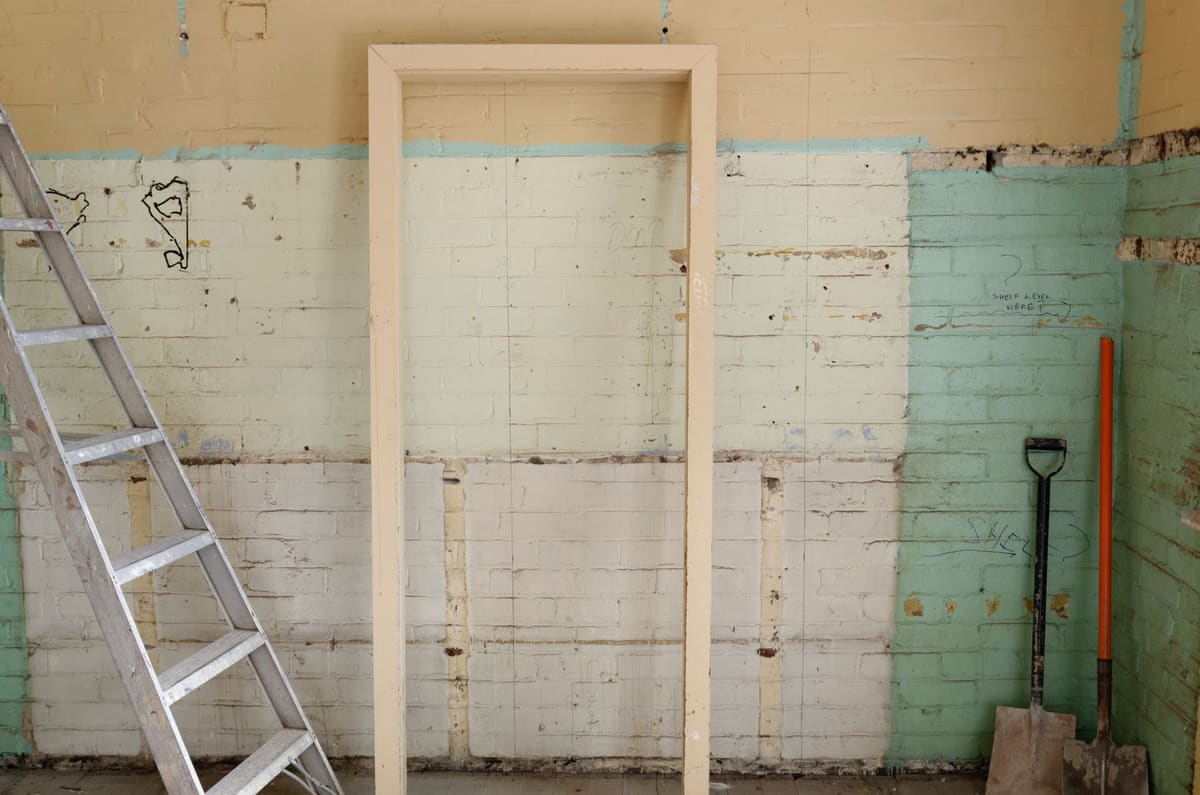 02
02
The rest of the suite
The other two things we do
A retail turnover is rarely only the floor. The fit-out walls, the ceiling grid and the old casework usually go in the same week, and on a run this long it makes no sense to bring two trades up on two separate trips.
Interior demolition is the strip-out: partitions, ceiling grid and tile, millwork and casework, back-to-shell where the next tenant wants a blank box. Occupied-building work is the same job with the neighbours still open — containment up the whole time, noise pushed into the evening or the weekend, corridor kept usable.
- Partitions and non-structural walls
- Ceiling grid and tile
- Millwork, casework and shopfittings
- Back-to-shell strip-out
- Load-out and haul-off
- Night and weekend sequencing
Nearby
The towns either side of Rogers
If your building is not in Rogers itself, one of these probably is. All distances are straight-line from the Higden yard, the same measure as the number at the top of this page.
Up and down I‑49
Within eleven miles of Rogers’ number
Bentonville is the Benton County seat, immediately above Rogers. Springdale and Fayetteville sit below it in Washington County. All four are close enough together that a job in two of them can be sequenced as one trip.
Other directions from the yard
Same band, different road
These are not on the Rogers run — they head off the yard the other ways. Every town we cover is listed on the service areas page.

Rogers, Arkansas
Tell us how many suites
Ricky answers his own phone. Two business days to the walkthrough, a written number the same day, and a punch walk before the crew leaves. If there is more than one space in play, bring them all to the walkthrough.
Call(501) 259-7997