- Home
- Floor demolition
- Springdale
Washington County · About 117 miles out
Floor Demolition in Springdale, AR
Springdale sits about 117 miles from the yard in Higden, at the far end of the footprint on I‑49. That distance changes how the work gets planned. It does not change what lands on the truck. We tear it out. You get a clean slab.
Free, no-obligation on-site quote.
 01
01
What comes off the slab here
Warehouse coatings, not just tile
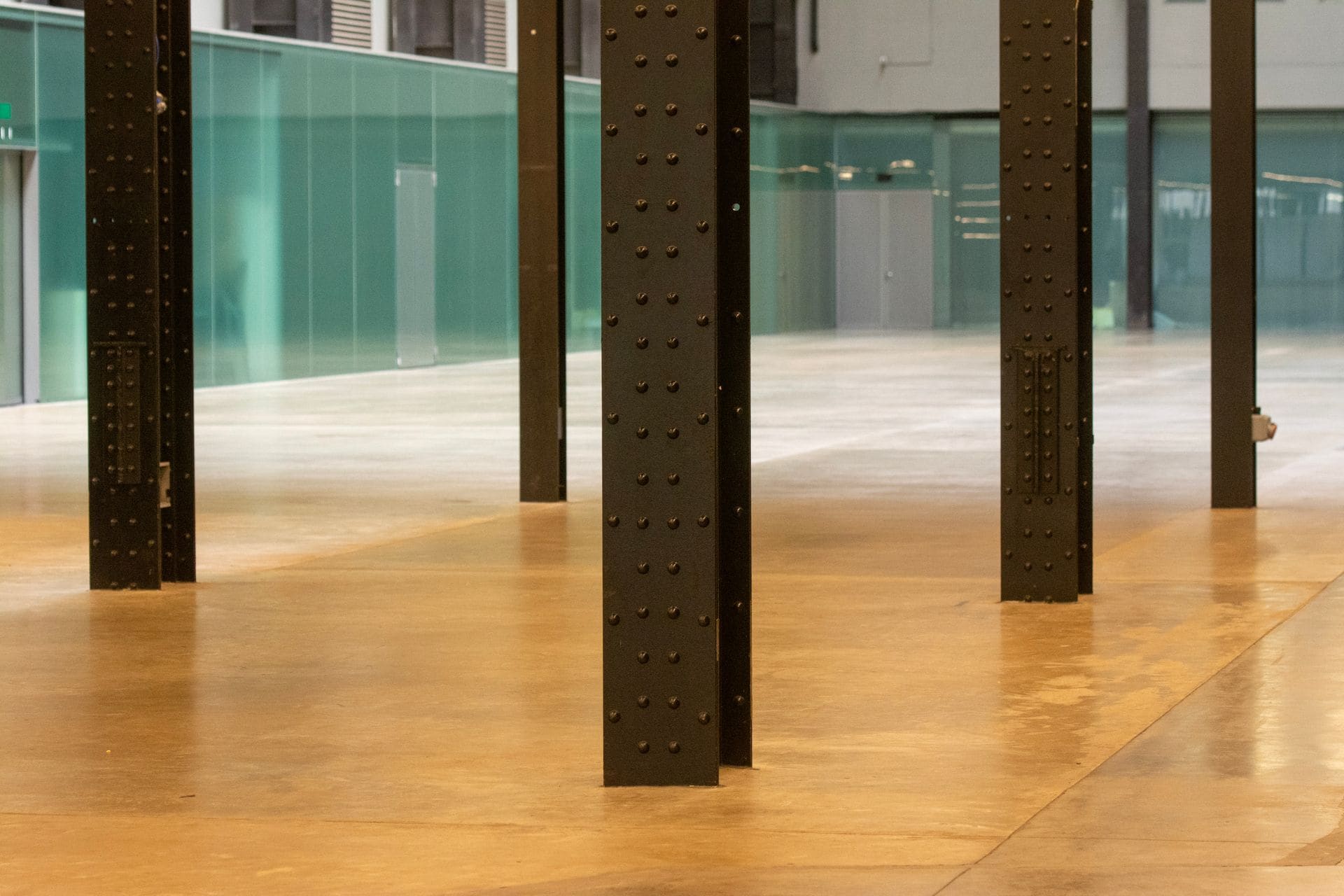
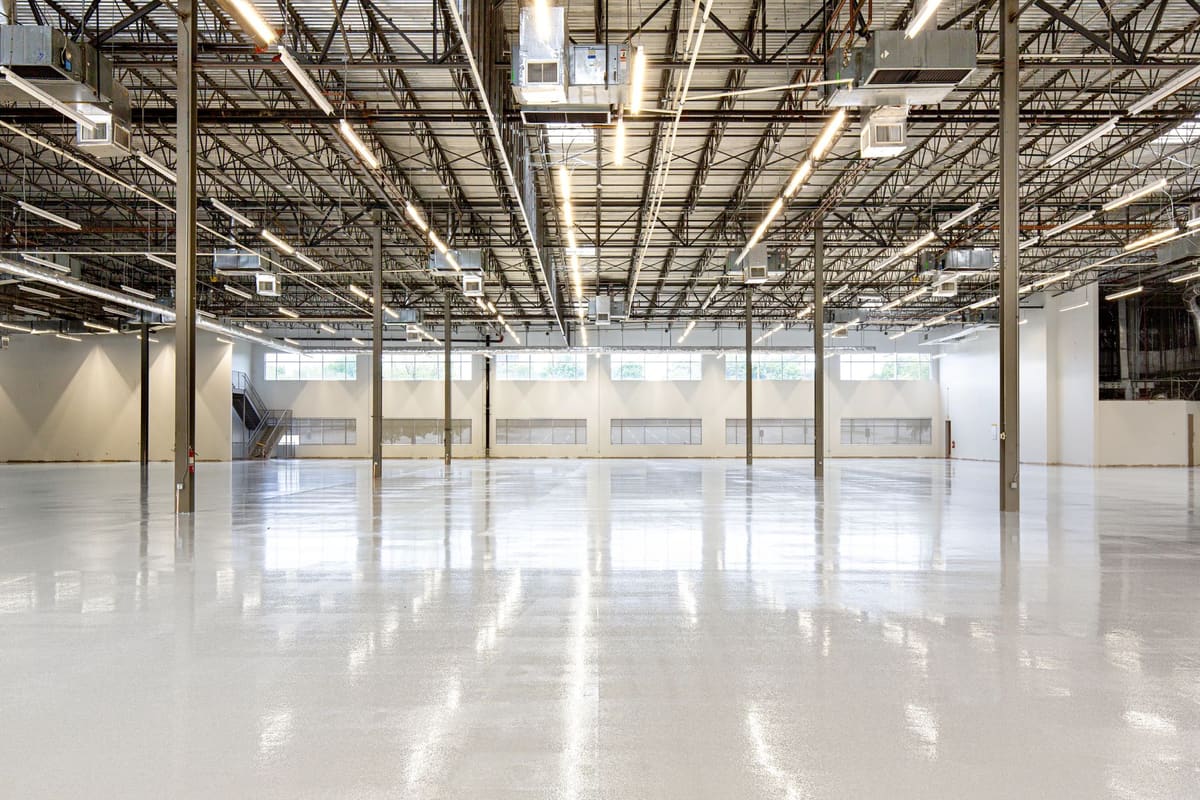
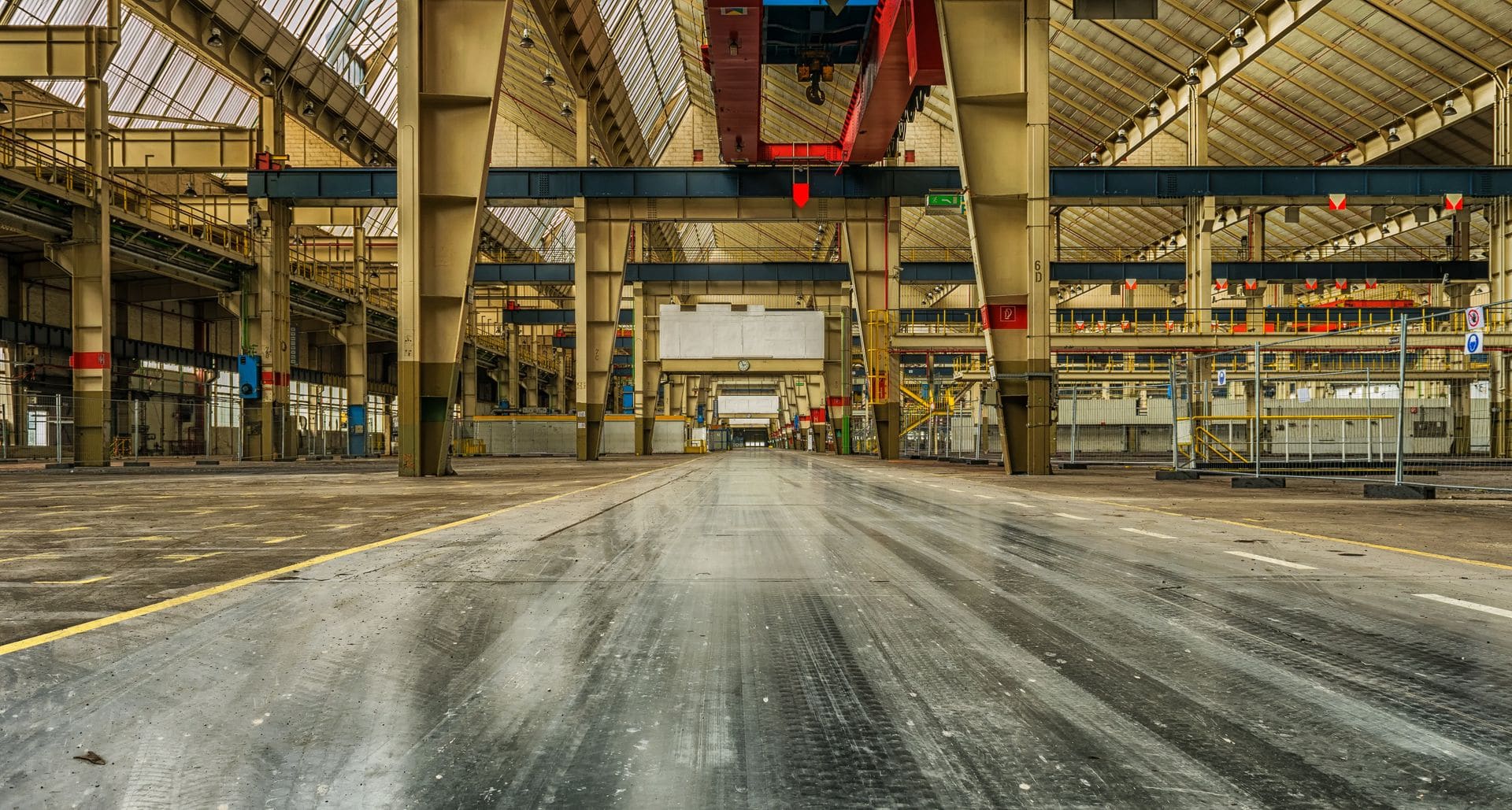
Springdale is a working town of 89,368 people, and a lot of its square footage was built to hold pallets rather than shoppers. Distribution space, light manufacturing, shops and warehouses with big open floor plates and long clear runs between columns. Commercial frontage along West Huntsville Avenue and the older shop stock behind it runs the same way.
So the work here skews heavy. Coatings more than ceramic. Square footage more than finish detail. A small retail tear-out is a day of careful edge work; a warehouse floor is a week of grinding, and the two do not get quoted the same way. Both come off the same slab in the end.
Epoxy and urethane coatings come down to a substrate the next coating will actually bond to. That usually means a shot blaster rather than a grinder, because a blast profile holds a coating and a polished slab does not. Where a slab has spalled or delaminated we saw-cut the bad area out and leave a clean edge for the patch. Where a coating is going back down we moisture test first, because a slab still giving up water will push a new coating off inside a year.
- Epoxy and urethane coatings, ground or shot blasted off
- Cure-and-seal and old sealers off warehouse slabs
- VCT and cutback mastic in office and break areas
- Sheet vinyl and carpet tile in front-of-house space
- Ceramic, porcelain and stone tile on thinset or a mud bed
- Glue-down hardwood and nail-down over sleepers
- Carpet, pad and tack strip
- Self-leveler, gypcrete, sound mat and underlayment
- Saw-cutting spalled and delaminated slab for patch
- Moisture testing before a new coating goes down
Distance and schedule
What about 117 miles means
Springdale is about 117 miles from the yard, straight-line between town centres. The road number is longer. What actually matters is the band, and this is the far end of it.
Out here work gets planned as a block and run as one mobilisation. Nobody drives up for an afternoon. The crew comes with what the job needs, works it through, and pulls off when the slab is swept — which is a better way to run a tear-out anyway, because the floor stops being a string of interruptions to everyone else’s critical path.
Springdale has one advantage the ends of this corridor do not. It sits between Fayetteville and Rogers on I‑49, with Bentonville above that, so several buildings in the northwest cluster can share a single trip up. If you have a floor coming out in Springdale and another one in Fayetteville, or a landlord with two properties twenty minutes apart, that is one mobilisation, not two. Say it at the walkthrough. It is the cheapest thing you can do to move that line in your favour, and it costs you a sentence.
The same logic runs the walkthrough. At this distance a site visit is a deliberate trip, so everything gets settled on it: the substrate and what is under it, the loading dock, door widths, where the dumpster goes, what has to stay open while we work, and where the containment plastic lands. Two business days from your call to that visit. A written number the same day we walk it.
Nights and weekend runs make more sense here than anywhere else on the footprint. If the crew is already making the drive, the building may as well give up its quiet hours instead of a trading day.
- One mobilisation. The crew comes, works the block, and pulls off.
- Work in more than one northwest Arkansas town can share one trip up.
- Two business days from the call to an on-site walkthrough.
- The price does not move unless you change scope in writing.
Mid-market. Deliberately not the low bid, and we would rather say that here than at the walkthrough.
Get a Free QuoteWho calls from Springdale
Mostly people with an industrial building and a deadline
A town this size, weighted the way Springdale is weighted, calls in a particular order. Here is the order, honestly.
General contractors
The floor is on your critical path and nothing else starts until the substrate is clean. You want one contract, one crew, a date you can put in the programme, and somebody who tells you at the walkthrough what is not his lane — anything structural, anything load-bearing, anything needing a permit he did not price.
Facility and plant managers
A coating has failed, a slab is spalling under traffic, or a line is moving and the floor under it has to change. You need the work sequenced around production, containment up before anything comes down, and the honest version of how much dust a shot blaster makes. Grinding and blasting run to vacuum. Cleanup beyond the work zone is not included unless it is quoted.
Flooring installers and dealers
You sold the new floor. You do not want the tear-out, and you do not want to hand your installers a substrate somebody else guessed at. We take the old floor off, moisture test where a coating is going back down, and leave you a slab you can warrant your own work over.
Homeowners mid-remodel
Real work, and welcome, but never the lead at this distance. A single room this far from the yard rarely justifies the run on its own. If you are on the same street as a commercial job, or you can wait for one, say so.
The job
Start to finish, four steps
The full sequence lives on the floor demolition page. This is the short version, the way it runs on a Springdale job.
You call
Ricky answers the phone himself. No call centre, no answering service. Tell him what is on the slab, roughly how much of it, and whether the building is trading while the work happens.
The walkthrough
On site within two business days. Substrate, what is under it, dock access, door widths, dumpster position. A written number the same day. It does not move unless you change scope in writing.
Containment, then tear-out
Plastic seals the work zone and the air returns get covered before anything comes down. Ride-on scrapers, grinders, shot blasters and saws, all running to vacuum.
Load-out and sweep
Debris hauled off, slab swept, punch walk done before the crew leaves the site. One contract, one crew, one mobilisation.
Straight answers
The three things Springdale asks
You are about 117 miles away. What does that do to the price?
Mobilisation is in the number, and at this distance it is a real line rather than a rounding error. What it does not do is move afterwards — the price holds unless you change scope in writing.
The lever you have is the corridor. Springdale sits between Fayetteville and Rogers, so if you have work in more than one of those towns, or a second building anywhere in the cluster, that is one trip up instead of two. Mention it at the walkthrough rather than after the contract.
There is an old epoxy coating on our warehouse floor. Can it come off clean?
Yes, and the question is what goes back down. A shot blaster takes the coating off and leaves a profile the next system can grip. A grinder leaves a smoother slab, which is right under some finishes and wrong under a coating.
Where a new coating is going down we moisture test first. A slab still giving up water will push that coating off inside a year, and that is a conversation worth having before the work rather than after it. Spalled and delaminated areas get saw-cut out so the patch has a clean edge to key into.
Can you work nights or a weekend so we do not lose production?
Yes, and at this end of the state it often makes more sense than daytime work. If the crew is already making the run, the building may as well give up its quiet hours instead of a trading day.
Containment plastic seals the work zone and the air returns get covered before anything comes down. Grinding and shot blasting run to vacuum. The honest caveat: dust cleanup beyond the work zone is not included unless it is quoted. If you want the whole floor plate wiped down afterwards, ask for it and it goes in the number.
 02
02
While we are up there
The other two things we do
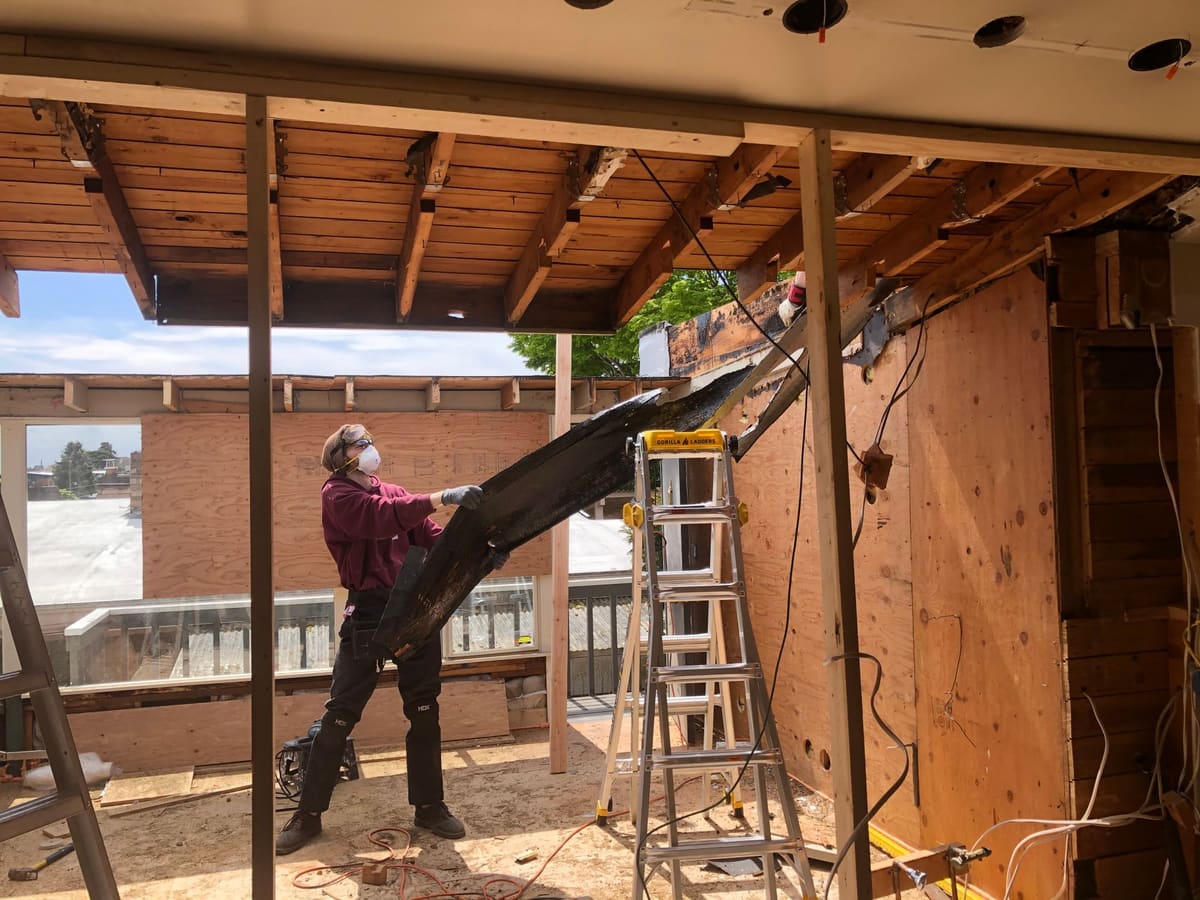
If the floor is coming out, the partitions and the ceiling grid above it are often coming out too. Doing both under one contract on one mobilisation is the whole argument at this distance — two trades on two trips up costs you more than the work is worth.
Interior demolition is the strip-out: partitions, ceiling grid and tile, millwork and casework, back-to-shell where the buildout calls for it. Occupied-building work is the version where the tenants are still trading, the containment stays up the whole time, and the noisy hours land at night or on a weekend.
- Partitions and non-structural walls
- Ceiling grid and tile
- Millwork and casework
- Back-to-shell strip-out
- Load-out and haul-off
- Night and weekend sequencing
Same run
Towns that share the trip up
These are the neighbours a Springdale job can be scheduled alongside. Distances are straight-line from the Higden yard, same as the number at the top of this page.
The I‑49 cluster
Within nine miles of Springdale’s number
Four towns strung along one interstate, all between about 115 and 126 miles out. Work in two of them is one mobilisation. Work in one of them is still a run worth making, it just carries the trip on its own.
Elsewhere at the far end
Different corridor, same band
These do not share a trip with Springdale — they are the other directions off the yard. The full list of towns is on the service areas page.
Springdale, Arkansas
Tell us what is on the slab
Ricky answers his own phone. Two business days to the walkthrough, a written number the same day, and one crew on one mobilisation. If you have a second building up the corridor, say so on the call.
Call(501) 259-7997