- Home
- Interior Demolition
Interior Demolition
Back to bare shell, on your date.
Retail and office buildouts stripped out by somebody who knows where to stop. Partitions, ceiling grid, millwork, casework, fixtures and the cabling nobody has traced — out of the building and gone, under one contract.
Free, no-obligation on-site quote.
Scope
What comes out of the space.
A strip-out is not one job. It is a stack of small ones that have to happen in the right order, in a building that is usually still standing over somebody else's schedule.
 01
01
Partitions, grid, and everything hung off them
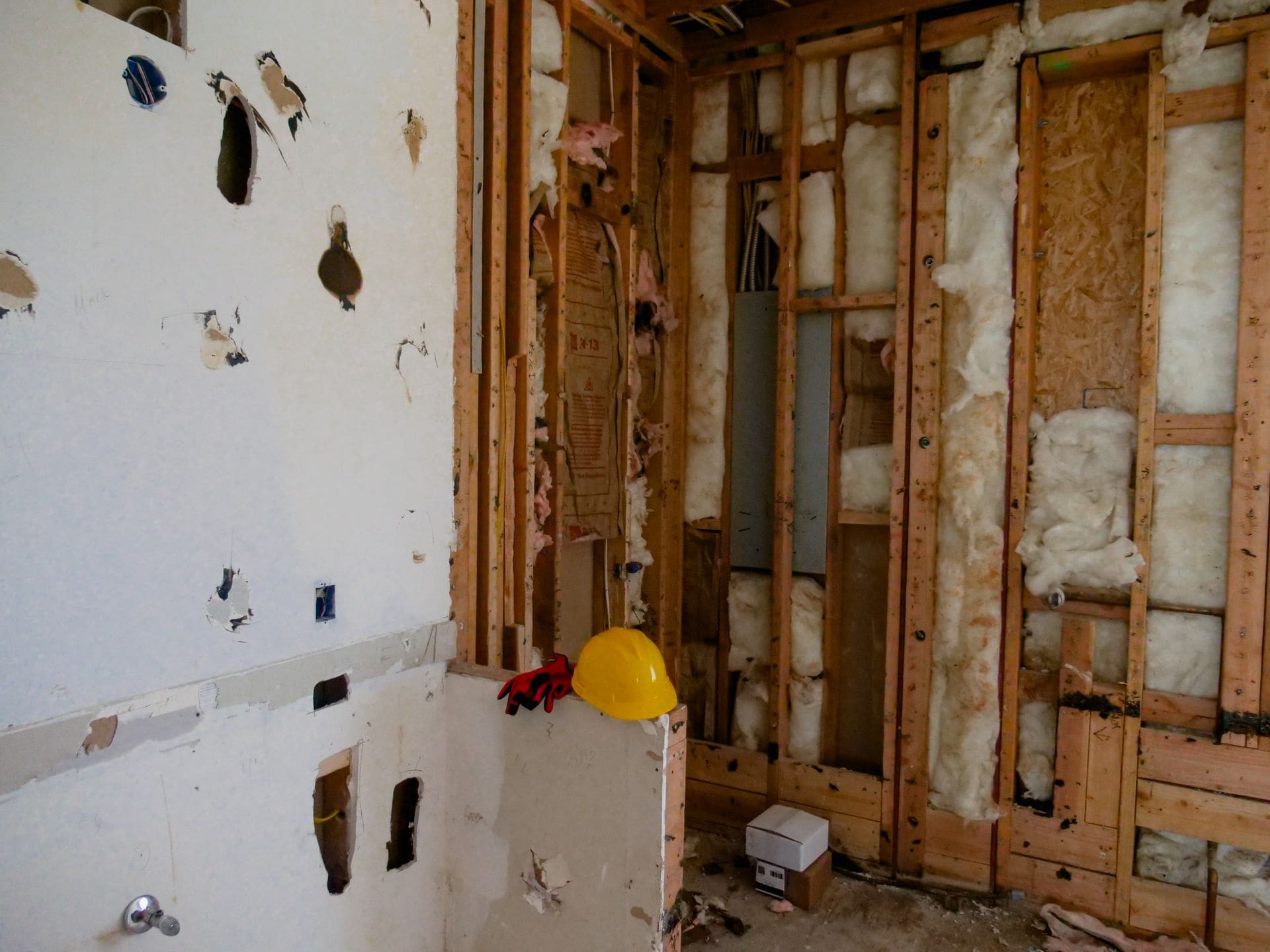
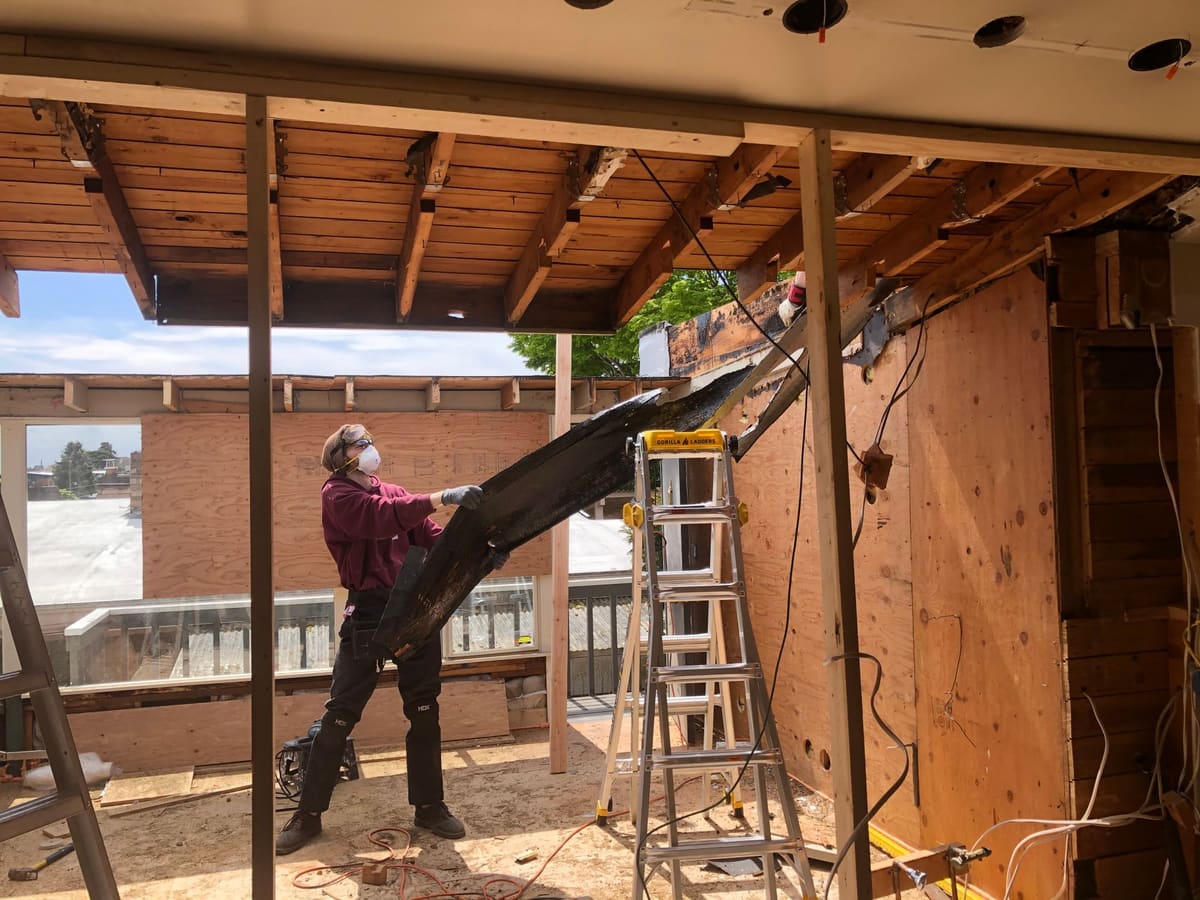
Non-structural walls come down as an assembly rather than as rubble — board off, then track and studs, with insulation pulled separately where that makes the load-out faster instead of slower. Above them, ceiling grid and tile, the hanger wire, the trims and whatever three tenants ago left sitting in the plenum.
Millwork, casework and built-in shelving come out in pieces big enough to be worth handling once and small enough to get through a corridor. Reception counters, back-of-house benching, display walls, fitting rooms, the run of upper cabinets in a break room — all of it is somebody's finish carpentry until the day it becomes debris.
- Non-structural walls
- Ceiling grid and tile
- Millwork
- Casework
- Built-in shelving
- Restroom strip-outs
- Break-room strip-outs
- Fixtures and old equipment
 02
02
Fixtures, equipment and cabling nobody owns
Restroom and break-room strip-outs, fixtures, and the old equipment a previous occupant left because moving it cost more than abandoning it. Then the cabling — data drops, coax, dead phone runs, security wire looping back to a closet nobody has a key for. On a tenant changeover that bundle is usually the single biggest surprise in the ceiling.
None of it is on the plan set, because the plan set describes what was built, not what accumulated. It gets found at the walkthrough where it can be, and it gets found early in the sequence where it cannot.
Definitions
What “back to shell” actually means.
Shell condition means different things to different landlords, which is why it gets written down before the first tool runs rather than argued about at handover.
What stays
The slab, the deck above, the columns and anything holding the building up. Structural and load-bearing elements are not touched. If a wall you assumed was a partition turns out to be carrying load, you hear it at the walkthrough and the drawing gets marked before anybody schedules around it.
What leaves
Everything the last occupant added. Partitions, ceiling grid and tile, millwork, casework, built-in shelving, fixtures, equipment and abandoned cabling. Loaded out of the building and hauled off — not stacked in the car park waiting on somebody else's truck.
How far it goes
Exactly as far as the written scope says. The stopping point is agreed in advance so “shell” means the same thing to you, to him and to the landlord's representative walking it at the end. Ambiguity here is what turns a strip-out into a dispute.
What you walk into
An empty space with the debris gone and the floor swept. The next trade sets out on a clean substrate instead of clearing somebody else's mess before it can start its own work.
If the lease says one thing and the drawings say another, bring both to the walkthrough.
Get a Quote on Your BuildoutThe limits
He tells you where he stops.
Anything structural. Anything load-bearing. Anything that needs a permit he did not price. Those three are not his lane, and you are told at the walkthrough — not halfway through.
Every general contractor reading this has met a demolition sub who did not know the difference, or knew and kept quiet. A partition comes down on the Tuesday, an engineer is standing in the space on the Wednesday, and a two-week strip-out turns into a six-week problem with four trades stacked behind it and a tenant asking about a handover date.
So the limits get named while the space is still intact and the sequence can still be rearranged for free. That is the point of saying it on day one instead of day nine: at the walkthrough it is a scheduling decision, and once the wall is open it is an argument with a machine standing idle and everybody's rate running.
Asbestos is handled the same way. On an older changeover it is a live possibility under flooring and in ceiling material, and the test is arranged and paid for by the customer. It is not folded into his price, and that is said before anything is signed rather than discovered afterwards.
- Load-bearing walls and structure. Named at the walkthrough, and left to the trade that owns them.
- Permits he did not price. Flagged before the schedule is built around his crew.
- Asbestos testing. Arranged and paid for by the customer. Never inside the number.
- Dust cleanup outside the work zone. Not included unless it has been quoted.
A demolition contractor who will not tell you where he stops is telling you he has not looked.
Sequence
Where demolition sits on the critical path.
Nothing behind you can start until the space is empty, which makes the order of operations worth more than the speed of any single day.
Mobilise and contain
Plastic seals the work zone, the air returns get covered, and the load-out route is protected before the first tool runs. Mobilisation is the day the building learns what is about to happen to it.
Grid down, then walls
The ceiling comes out first. Grid hangs off the partitions you are about to remove, and everything above it needs to be seen before a wall is opened. Reverse that order and you are working under a live ceiling, dropping tile onto rubble.
Load out and sweep
Debris moves out as the work moves, not as one pile at the end. The space is swept and handed over ready for layout, so the punch list at the end is a walk, not a negotiation.
The other trades matter to this sequence too. If the electrician needs the ceiling open to trace what is live, that happens between step two and step three, not after the walls are gone and the reference points with them. If a mechanical contractor is reusing any of the existing distribution, that gets marked before demolition starts and not rescued out of a skip afterwards.
Say on the call which trades follow you in. It changes what comes out first.
Bring the programme to the walkthrough and the sequence gets built around it.
Call (501) 259-7997Tenant changeovers
What is behind the wall.
 03
03
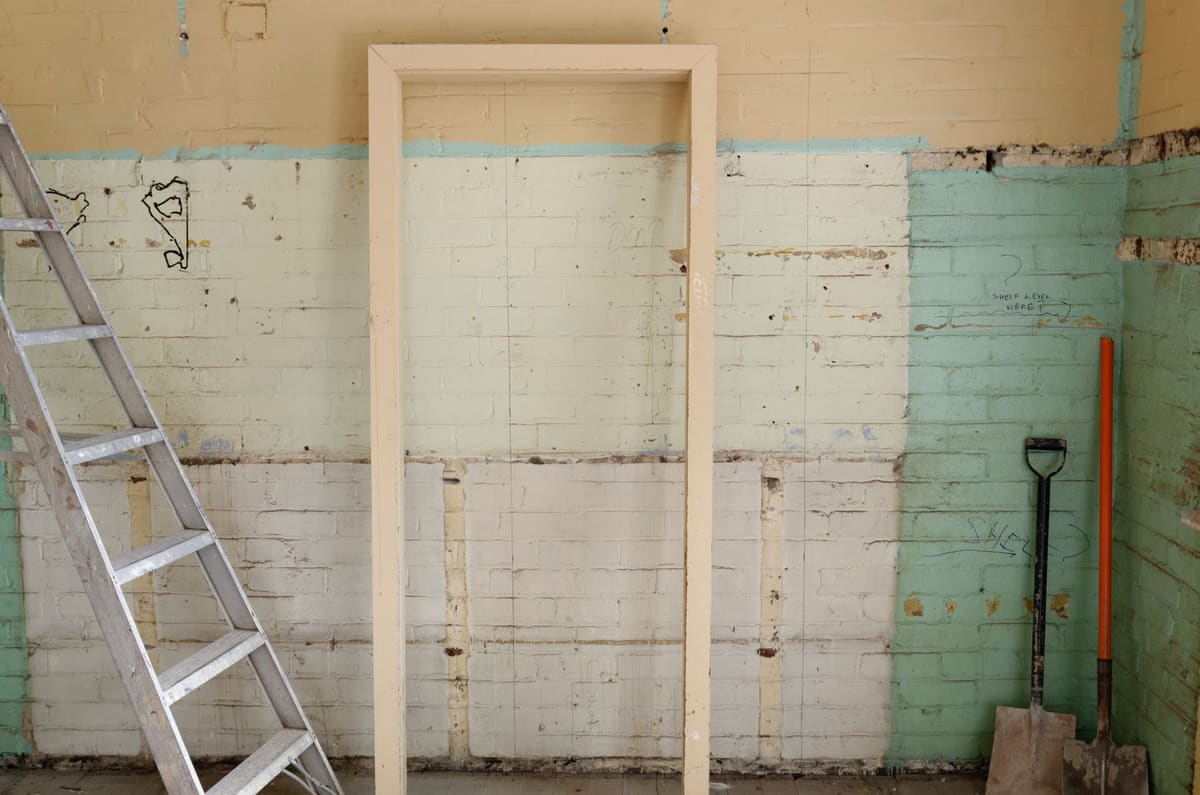
Nobody has opened this wall since 1998.
A space that has turned over three times has three sets of decisions inside it, and the drawings only ever recorded the first one. Blocking for a fixture that was removed a decade ago. Anchors and plate work left in the slab. A doorway framed shut and skimmed over so cleanly that only the trim line gives it away.
Under the flooring there is often more than anybody quoted for — a mud bed left where a restroom used to sit, two layers of vinyl where one was expected, glue that lifts in sheets in one bay and comes up as dust in the next.
See what we tear out →Most of that is found at the walkthrough, which is precisely why the walkthrough happens before a number is written. What genuinely cannot be seen until a wall is open gets handled the same way as everything else on this site: you are told, in writing, before it changes anything — and the written number does not move unless the scope moves with it.
Logistics
The route out is half the job.
 04
04
Freight lifts, dock hours and shared corridors
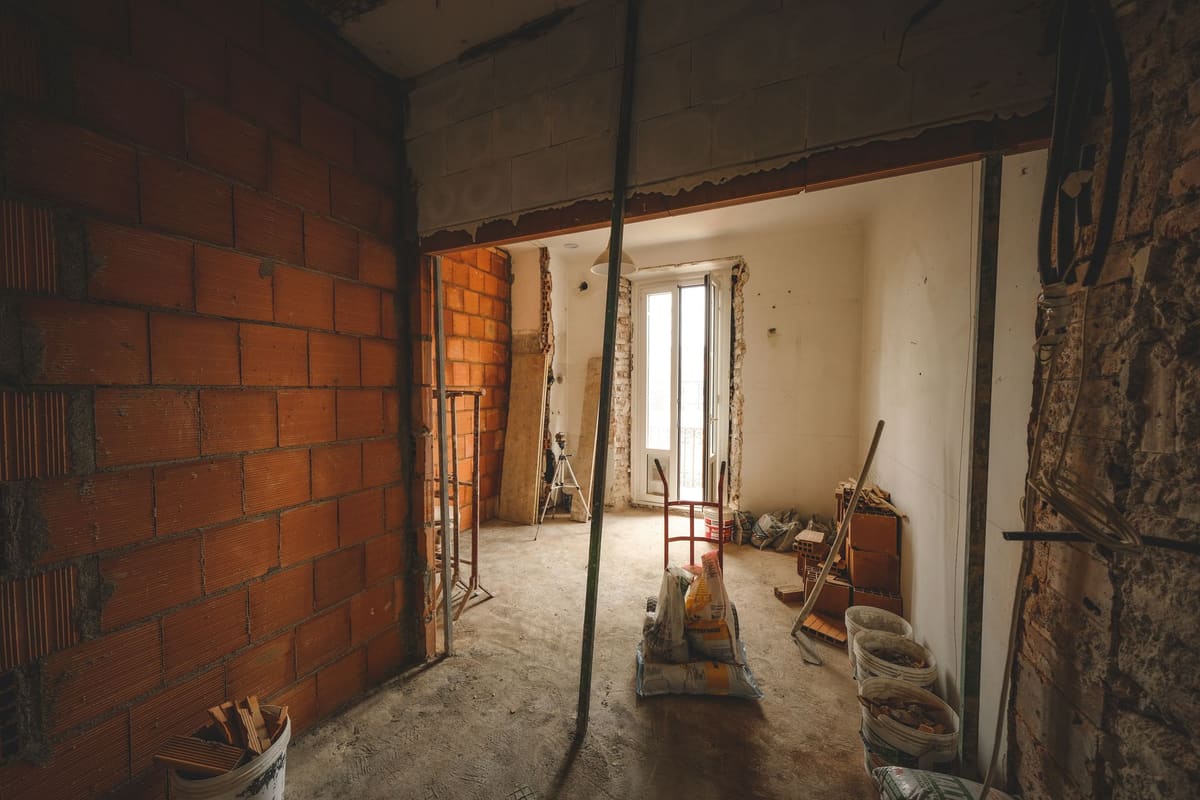
A strip-out on the third floor of a tenanted building is a different job from one at grade with a roll-up door twenty feet from the work. The freight lift has a booking sheet. The dock has hours. The corridor is shared with a business that is open and expects to stay that way, and every finished surface between the space and the truck has to survive the week.
Pricing a buildout as though the debris teleports is how a demolition sub loses a week and a general contractor loses a float. It gets walked, measured and worked out before the number is written — which route, which hours, and what has to be protected on the way.
Where a space cannot lose a business day, the loud work moves to nights and weekends and the building carries on trading around it.
See what we tear out →One contract
Tear-out and haul-off, not two contractors.
The demolition, the load-out, the haul-off and the sweep are bought once, from one outfit, on one number.
The alternative is a gap. The strip-out finishes on the Thursday, the hauler is booked for the following Wednesday, and a space that is technically clear sits full of debris while your next trade stands down. Nobody planned that gap; it just falls out of buying the two halves separately.
Here the debris leaves with the crew that made it. What the next trade walks into is a floor, not a site — and if the flooring is coming up in the same programme, it comes up in the same mobilisation instead of a second one.
See what we tear out →- Containment before the first tool. Work zone sealed, air returns covered.
- Debris load-out. Moved as the work moves, on the agreed route and hours.
- Haul-off. Off site in the same contract as the demolition.
- The space swept. Handed over ready for the next trade to set out.
Pricing
Why he will not quote off a floor plan.
A floor plan gives you square footage and a partition layout. It does not tell you what is sitting above the ceiling, how a skip-load of grid and board gets from the fourth floor to a truck, or which of those partitions is doing structural work. Quoting from it means either padding the number against the unknown or finding the unknown later at your expense.
So the space gets walked. The written number lands the same day, and after that it holds — the only thing that changes it is a change of scope, in writing.
The price sits mid-market and this page is not going to dress that up. He is deliberately not the low bid on a buildout, because the low bid on a strip-out is usually a number with the load-out logistics left out of it, and that missing money reappears as a change order on the week you can least afford one.
On money up front: depending on the job, but generally none. Whichever applies to yours, you will know when the number is handed over rather than after your date is committed to it.
Send the drawings if you have them. He will still walk it.
Get a Quote on Your BuildoutBefore you book it
Questions from the last five buildouts.
Can you work nights and weekends?
Yes. Occupied buildings are ordinary work here, and the loud part moves to hours the space can afford to lose. Containment stays up either way, because a tenant trading on Monday morning should not be able to tell the difference.
Does the flooring come up too?
Yes, and on a buildout it usually should come up in the same mobilisation. Tile off thinset or off a mud bed, VCT and cutback mastic, sheet vinyl, glue-down hardwood, carpet with pad and tack strip, coatings and self-leveler — with grinding and shot blasting run to vacuum where the substrate needs work.
How far do you travel?
The whole state of Arkansas, plus the western half of Tennessee — Little Rock, Conway, Searcy, Jonesboro, Fayetteville and Fort Smith through to Memphis and Jackson. The yard is at Higden, up by Greers Ferry, and travel is inside the written number before you agree to it.
How soon can somebody look at it?
Within two business days of the call, on site. The number is written the same day the space is walked. Ricky answers the phone himself, so booking it takes one conversation rather than three.
And if something is wrong after you finish?
He comes back and fixes it. That is the whole answer.
Get the space empty on the date you promised.
Walk it with the owner, get the number in writing the same day, and know where he stops before anybody swings anything.
Free, no-obligation on-site quote.
Call the owner direct(501) 259-7997